

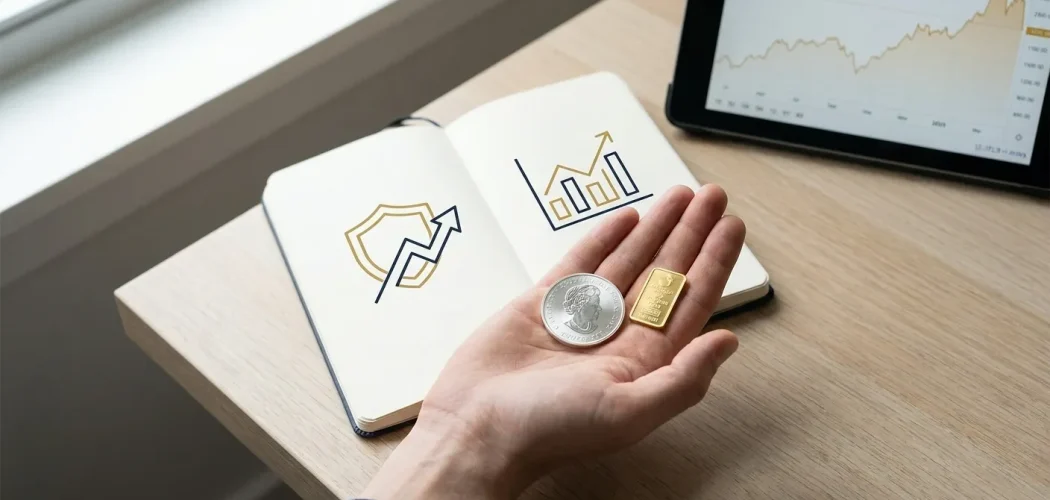
For investors like Sarah, the recent market movements, with gold and silver experiencing both exhilarating highs and sharp corrections, can feel overwhelming. Yet, volatility doesn’t have to be a roadblock; it can be an opportunity when approached with robust precious metals investment strategies. At Silver Price Gold, we guide you to look beyond the daily headlines and build a portfolio designed for long-term success, even amidst market swings. The key is understanding how to position your assets intelligently, drawing lessons from historical trends and current market dynamics. Consequently, you can transform uncertainty into potential.
The Foundation: Diversification and Long-Term Vision
The first pillar of any sound investment approach, especially in precious metals, is diversification. While gold and silver offer unique benefits, spreading your investments across different asset classes can cushion your portfolio during downturns in any single sector. Within precious metals, consider a balanced allocation between gold and silver, recognizing silver’s higher industrial demand and potential for greater volatility, alongside gold’s traditional safe-haven role. Indeed, this balance can provide stability.
Furthermore, adopt a long-term perspective. The record highs of 2025 and early 2026, followed by corrections, illustrate the cyclical nature of commodity markets. Gold’s impressive 65% gain in 2025 and silver’s nearly 150% surge were significant, but short-term price movements should not dictate long-term goals. History shows that precious metals tend to preserve wealth over extended periods, particularly in times of economic uncertainty and persistent inflation, like the environment we’ve seen since 2025. Therefore, patience is paramount.
Strategic Entry Points: Dollar-Cost Averaging
One of the most effective precious metals buying strategies for new investors is dollar-cost averaging. Instead of attempting to time the market – a notoriously difficult task – this approach involves investing a fixed amount of money at regular intervals, regardless of the asset’s price. When prices are high, your fixed amount buys fewer units; when prices are low, it buys more. Over time, this strategy helps to average out your purchase price and mitigate the impact of market volatility. Given the gold and silver corrections seen in mid-2026 after their January peaks, dollar-cost averaging could have provided excellent opportunities for accumulation. This method embodies a disciplined approach to building your holdings.
Understanding Risk and Reward: Silver’s Unique Position
While both gold and silver are precious metals, their market characteristics differ. Silver’s market is significantly smaller and less liquid than gold’s, which can lead to higher volatility. However, this also means silver can offer greater upside potential during bull runs. Its strong industrial demand, accounting for 58% of total demand in 2025, from sectors like solar energy and electric vehicles, provides a robust fundamental underpinning. Understanding this dual nature – industrial utility and investment metal – is crucial for any silver investment plan. For more insights into silver’s market dynamics, you might find our Silver News August 2026 particularly informative.
Gold, conversely, is often seen as the ultimate safe haven, particularly during geopolitical instability or economic downturns. Its primary demand comes from investment and jewelry, making it less susceptible to industrial demand fluctuations. Consequently, gold typically exhibits lower volatility than silver. A well-rounded portfolio often includes both metals, allowing you to benefit from gold’s stability and silver’s growth potential. This balanced approach is a cornerstone of effective precious metals investment strategies.
The Role of Economic Indicators in Your Investment Plan
Monitoring key economic indicators is another vital component of successful investment approaches for precious metals. Inflation rates, interest rate decisions by central banks, and global economic growth forecasts significantly influence gold and silver prices. For example, higher inflation often boosts gold’s appeal as a hedge against currency devaluation. Conversely, rising interest rates can make non-yielding assets like gold less attractive, as investors might opt for interest-bearing alternatives. Therefore, staying informed about these macro trends is essential.
Consider the impact of central bank policies. When central banks signal a hawkish stance, as seen with some recent speeches, gold prices can react sharply. Our article on Warsh’s Hawkish Jackson Hole Speech Sends Gold Sharply Lower illustrates this point. Understanding these correlations empowers you to anticipate market shifts rather than merely reacting to them. Furthermore, economic data like the Personal Consumption Expenditures (PCE) index can provide clues about inflationary pressures, influencing investor sentiment towards precious metals. To stay current on broader market developments, our general News section offers comprehensive updates.
Developing a Rebalancing Discipline
Even the most meticulously crafted precious metals investment strategies require periodic review and rebalancing. Market conditions change, and so too should your portfolio allocation. Rebalancing involves adjusting your holdings back to your target percentages. For instance, if gold has significantly outperformed silver, you might sell a portion of your gold to buy more silver, bringing your portfolio back into alignment with your original strategy. This discipline ensures you are consistently buying low and selling high, albeit in a structured manner.
Rebalancing prevents your portfolio from drifting too far from your risk tolerance and long-term objectives. It’s not about chasing market trends but about maintaining a strategic allocation. This proactive management is a hallmark of sophisticated precious metals investment strategies. Consequently, you maintain control over your investment journey.
Considering Physical vs. Digital Precious Metals
When implementing your precious metals investment strategies, you also need to decide on the form of your investment: physical bullion (coins, bars) or digital/paper assets (ETFs, mining stocks). Physical gold and silver offer direct ownership and protection against systemic risks, as they are not subject to counterparty risk. However, they come with storage and insurance costs. Conversely, ETFs and other paper assets offer liquidity and ease of trading, but they represent a claim on the metal, not direct ownership. Each option has its merits, and the best choice depends on your individual goals, risk appetite, and desired level of control.
Many investors choose a hybrid approach, holding some physical bullion for long-term security and using ETFs for tactical trading or greater market exposure. Understanding the pros and cons of each is crucial for constructing a robust portfolio. For instance, investing in Mining News, Mining Stocks, Junior Mining can offer exposure to precious metals with potentially higher growth, but also higher risk, due to operational factors of the companies involved. Always conduct thorough due diligence.
Harnessing Volatility: Opportunities in Market Swings
While volatility can be unsettling, it also presents distinct opportunities for those with well-defined precious metals investment strategies. Sharp corrections, like those seen in mid-2026, can serve as excellent entry points for investors who have capital ready to deploy. Instead of fearing price drops, view them as chances to acquire more assets at a lower cost, especially if your long-term outlook remains positive. This counter-cyclical thinking is a powerful tool.
For example, during periods when global markets face significant uncertainty, gold often acts as a safe haven, seeing increased demand. This dynamic was evident in early 2025, and again when gold smashed $4,600/oz, as discussed in our article Wall Street bereft of bears after gold smashes $4,600/oz. Learning to identify these patterns and act decisively, yet prudently, is a hallmark of experienced investors. Furthermore, a diversified approach helps you withstand short-term fluctuations, allowing you to capitalize on long-term trends. Therefore, embrace strategic patience.
Inflation, Interest Rates, and Precious Metals
The relationship between inflation, interest rates, and precious metals is complex but critical for effective investment strategies. High inflation erodes the purchasing power of fiat currencies, making gold and silver more attractive as stores of value. Conversely, rising interest rates can increase the opportunity cost of holding non-yielding assets like precious metals, as investors can earn higher returns from bonds or savings accounts. This interplay requires careful consideration.
For a detailed exploration of how interest rates affect precious metal prices, our article Interest Rates and Gold: How Rates Affect Prices provides valuable context. Understanding this dynamic is a cornerstone of informed precious metals investment strategies. Furthermore, global monetary policy decisions, such as those from the Federal Reserve, can significantly impact these relationships. For instance, a dovish stance often supports precious metals, while a hawkish outlook can create headwinds. Consequently, staying abreast of these policy shifts is paramount.
Building a Resilient Portfolio: Beyond the Basics
Building a truly resilient portfolio involves more than just buying gold and silver. It requires a holistic understanding of market forces and a commitment to continuous learning. Consider geopolitical developments; political instability in key regions can drive demand for safe-haven assets. For example, increased global tensions can often lead to a surge in gold prices. This is why staying informed about world events, beyond just financial news, is beneficial.
Moreover, technological advancements impacting industrial demand for silver, such as those in renewable energy and electronics, are worth monitoring. The long-term growth trajectory of these sectors provides a fundamental tailwind for silver. By integrating these broader perspectives into your precious metals investment strategies, you build a more robust and adaptable portfolio. The World Gold Council offers excellent resources for understanding global gold demand and supply dynamics, providing an external perspective on market fundamentals. Similarly, The Silver Institute provides comprehensive data on global silver statistics, which can be invaluable for your research.
Conclusion: Your Path to Confident Precious Metals Investing
Navigating the inherent volatility of precious metals markets demands a clear understanding of robust precious metals investment strategies. By embracing diversification, adopting a long-term perspective, and employing disciplined approaches like dollar-cost averaging, you can transform market swings into opportunities. Understanding the distinct roles of gold and silver, monitoring economic indicators, and regularly rebalancing your portfolio are all critical steps. At Silver Price Gold, we empower you with the knowledge and confidence to build a resilient precious metals portfolio, ensuring your financial future is secure, even amidst economic uncertainty. Your journey to confident investing begins here, with well-informed decisions and strategic foresight. Trust in these foundational principles to guide your success.
FAQ:
What is the most important principle for investing in gold and silver?
The most important principle is diversification. Spreading your investments across different asset classes, and even within precious metals, helps mitigate risk and build a more resilient portfolio that can withstand market fluctuations. This foundation supports all other investment tactics.
How can new investors approach buying precious metals?
New investors can effectively approach buying precious metals through dollar-cost averaging. This involves investing a fixed amount regularly, regardless of price, which helps average out the purchase cost over time and reduces the impact of market volatility. It’s a disciplined and less stressful way to accumulate assets.
Why is silver often more volatile than gold?
Silver is often more volatile than gold primarily because its market is smaller and less liquid. Additionally, silver has significant industrial demand, making its price more susceptible to economic cycles and industrial production fluctuations, whereas gold is primarily an investment and jewelry metal.
Should I focus on physical bullion or digital precious metal assets?
The choice between physical bullion and digital precious metal assets depends on your goals. Physical bullion offers direct ownership and protection against systemic risks, but has storage costs. Digital assets like ETFs offer liquidity and ease of trading. Many investors opt for a hybrid approach, combining both for diverse benefits.
How do economic factors like inflation and interest rates affect precious metal prices?
Economic factors significantly influence precious metal prices. High inflation generally boosts gold and silver’s appeal as a hedge against currency devaluation. Conversely, rising interest rates can make non-yielding assets less attractive by increasing the returns on interest-bearing alternatives. Therefore, understanding these dynamics is crucial for informed decisions.

