

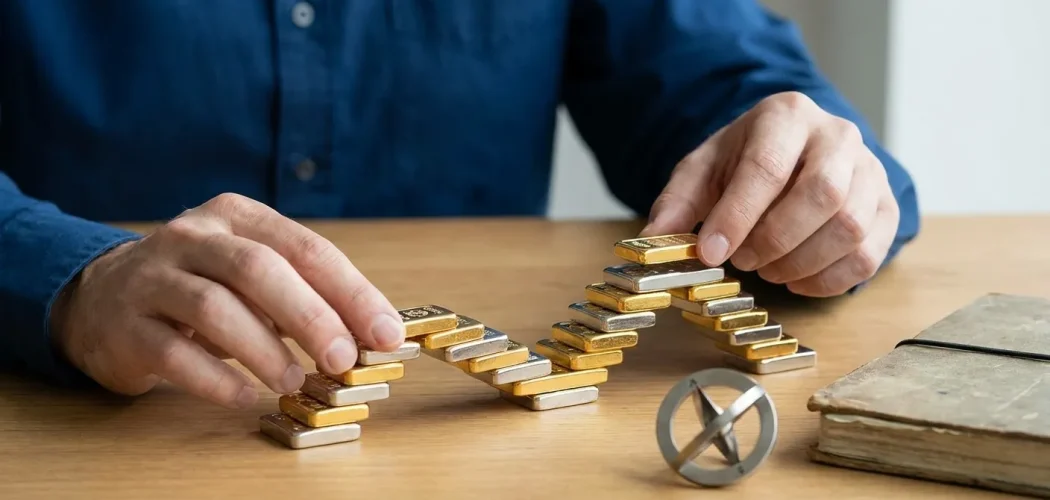
For new investors like Sarah, the thought of market volatility can be intimidating. While gold and silver offer unique benefits, their prices are not immune to significant swings. We’ve seen remarkable performance in 2025, with gold surging above $4,000/oz and silver surpassing $60/oz, followed by notable corrections in 2026. This article will equip you with practical strategies for managing precious metals volatility, transforming potential apprehension into a strategic advantage.
Understanding the forces behind these movements is the first step toward confident investing. By adopting a long-term perspective and employing smart tactics, you can navigate the market’s natural ebbs and flows with greater assurance.
The Nature of Precious Metals Volatility
Precious metals, particularly silver, can exhibit higher volatility compared to other asset classes. Silver’s market, significantly smaller and less liquid than gold’s, reacts more acutely to supply and demand shifts. Its dual role as an investment asset and an industrial commodity (driving 58% of its demand in 2025 for sectors like solar and electric vehicles) adds another layer of complexity. Global economic uncertainty, interest rate expectations, and geopolitical tensions all play a part in short-term price movements.
Consider the recent past: Gold surged approximately 65% in 2025, reaching new all-time highs, while silver’s performance was even more remarkable, rising around 149.1%. However, after peaking in January 2026 (gold near $5,600/oz, silver at $121.62/oz), both experienced significant corrections – gold fell 28%, and silver dropped over 52% by July 2026. These sharp movements highlight the importance of strategic management rather than reactive decisions.
Strategies for Managing Precious Metals Volatility
Successfully navigating a volatile market requires discipline and a well-thought-out plan. Here are key strategies:
1. Dollar-Cost Averaging (DCA)
This is perhaps the most effective strategy for beginners. Instead of trying to time the market, invest a fixed amount of money at regular intervals (e.g., monthly). When prices are high, your fixed amount buys fewer ounces; when prices are low, it buys more. Over time, this averages out your purchase price and reduces the impact of short-term fluctuations. It removes emotion from your buying decisions, consequently fostering a more disciplined approach to investing in precious metals.
2. Long-Term Perspective
Precious metals are often considered a long-term hedge against inflation and economic instability. While short-term corrections can be steep, the long-term outlook remains strong. For 2026, market expectations for gold averaged around $5,515/oz by year-end, with some institutional forecasts projecting $6,000/oz. Silver’s average 2026 price is projected near $97/oz. Focusing on these longer-term trends helps you weather short-term dips without panic selling. Indeed, patient investors often see the greatest rewards.
3. Diversification Within Precious Metals
Don’t put all your eggs in one basket. While gold and silver are both precious metals, their market dynamics can differ. Gold is typically seen as a safe-haven asset, reacting strongly to economic and geopolitical uncertainties. Silver, conversely, has a significant industrial demand component, making it more sensitive to economic growth cycles. Therefore, holding a mix of both can help balance your portfolio, as one might perform better when the other is lagging. Furthermore, consider platinum and palladium for even broader exposure.
4. Understanding Macroeconomic Factors
Several macroeconomic factors significantly influence precious metals prices. Interest rates, for example, play a crucial role. Higher interest rates can make non-yielding assets like gold and silver less attractive. Conversely, lower rates often support higher precious metals prices. Understanding how interest rates affect gold and silver prices is vital for anticipating market shifts. Global economic growth, inflation expectations, and currency strength also exert considerable influence. For instance, a weaker U.S. dollar typically makes dollar-denominated gold and silver more affordable for international buyers, thus increasing demand. Staying informed on these broader economic trends is key to understanding the context of price movements.
5. Geopolitical Awareness
Geopolitical events often trigger sharp, unpredictable movements in precious metals markets. Conflicts, political instability, and major policy changes can send investors flocking to safe-haven assets. For example, periods of heightened international tension, such as the concerns surrounding a potential Iran conflict, can cause gold prices to surge. News related to geopolitical shifts can provide early indicators for potential price reactions. Therefore, maintaining an awareness of global affairs is a prudent part of managing precious metals volatility.
6. Risk Management and Position Sizing
Effective risk management is paramount. Never invest more than you can comfortably afford to lose. Determine a suitable allocation for precious metals within your overall portfolio, typically a smaller percentage for most investors. Moreover, consider using stop-loss orders if you are actively trading, though this is less common for long-term physical metal investors. Proper position sizing ensures that no single investment swing can significantly derail your financial stability. This disciplined approach is crucial for successfully managing precious metals volatility.
7. Avoiding Emotional Decisions
Market volatility often triggers emotional responses, leading to impulsive buying at peaks or panic selling during dips. This is a common pitfall for many investors. Instead, adhere to your predetermined strategy. Remember, market corrections are a natural part of any investment cycle. Trust your research and long-term outlook. Learning to detach emotionally from short-term price movements is a powerful skill in managing precious metals volatility. Furthermore, focus on the underlying value and purpose of your investment.
8. Continuous Education and Market Monitoring
The precious metals market is dynamic, constantly influenced by new data, policies, and global events. Therefore, continuous education is not just beneficial, but essential. Regularly read reputable market analyses, economic reports, and news from authoritative sources. Staying informed helps you understand the rationale behind price movements and adjust your strategy if fundamental conditions change. For example, keeping an eye on the latest silver news provides timely insights. While we advocate for a long-term approach, being aware of significant market shifts empowers informed decision-making. The World Gold Council offers excellent research and data for gold investors, providing a global perspective on market trends. Similarly, The Silver Institute is a leading source for information on silver’s supply, demand, and market developments.
Navigating Market Corrections and Opportunities
Market corrections, though unsettling, present unique opportunities for disciplined investors. When prices dip, it can be an opportune time to accumulate more metal at a lower cost, especially if you are employing a dollar-cost averaging strategy. This approach allows you to increase your holdings without succumbing to the fear that often accompanies downward trends. Many seasoned investors view market pullbacks not as losses, but as chances to enhance their positions, particularly when long-term bullish forecasts for gold remain strong.
Indeed, understanding the cyclical nature of markets helps in managing precious metals volatility. Historical data shows that even after significant corrections, precious metals have often recovered and reached new highs over time. The key is to distinguish between short-term noise and long-term trends. Instead of reacting impulsively, assess whether the fundamental reasons for your investment still hold true. If they do, a correction might simply be a temporary setback, offering a chance to buy at a discount. This perspective transforms potential fear into a strategic advantage.
The Role of Safe Havens in a Volatile World
In times of heightened global uncertainty, precious metals traditionally serve as safe-haven assets. This means investors often turn to gold and silver to preserve wealth when other asset classes, like stocks or bonds, are experiencing turmoil. The inherent value and liquidity of gold, in particular, make it a preferred choice during financial crises or geopolitical instability. For example, when there are concerns about inflation or the stability of fiat currencies, precious metals tend to perform well. This intrinsic role provides a foundational reason for their inclusion in a diversified portfolio, especially when considering strategies for managing precious metals volatility.
Furthermore, the physical nature of gold and silver offers a tangible store of value that is not subject to counterparty risk, unlike many other financial assets. This aspect is particularly appealing during periods of extreme market stress. By holding physical precious metals, investors gain a sense of security and independence from the banking system. Consequently, they become a vital component of a robust wealth preservation strategy, helping to mitigate risks associated with broader market downturns.
Building a Resilient Precious Metals Portfolio
Building a resilient precious metals portfolio involves more than just buying gold and silver; it requires a thoughtful approach to asset allocation and risk management. Consider your personal financial goals, risk tolerance, and investment horizon when determining how much of your portfolio to allocate to precious metals. For some, a smaller allocation might suffice, while others seeking greater protection against inflation or economic uncertainty might opt for a larger share. Remember, the goal is not to eliminate volatility entirely, but to develop a framework for managing precious metals volatility effectively so that it doesn’t disrupt your long-term financial objectives.
Moreover, regularly review and rebalance your portfolio. Market conditions change, and your personal circumstances may evolve. Periodically assessing your holdings ensures that your precious metals allocation remains aligned with your overall investment strategy. This proactive management helps maintain balance and can prevent overexposure to any single asset class. By adopting a structured and disciplined approach, you can confidently navigate the market’s ups and downs, transforming potential challenges into opportunities for growth and wealth preservation.
Conclusion
Managing precious metals volatility is an essential skill for any investor in gold and silver. While market swings can be unsettling, they are a natural part of the investment landscape. By employing strategies such as dollar-cost averaging, maintaining a long-term perspective, diversifying your holdings, and staying informed about macroeconomic and geopolitical factors, you can transform these movements from a source of apprehension into a strategic advantage. Our goal is to empower you with the knowledge and confidence to navigate the precious metals market successfully. Remember, discipline and a well-thought-out plan are your most valuable assets in building and preserving wealth through precious metals.
FAQ
What causes prices of gold and silver to fluctuate?
Prices are influenced by global economic uncertainty, interest rate expectations, geopolitical tensions, and supply and demand dynamics. Silver, with its industrial demand, can be particularly sensitive to economic growth.
Is dollar-cost averaging suitable for all investors?
Dollar-cost averaging is highly effective for beginners and long-term investors. It helps mitigate the risk of market timing by spreading purchases over time, thus averaging out the cost and reducing emotional decision-making.
How important is a long-term view when investing in precious metals?
A long-term perspective is crucial because precious metals often act as a hedge against inflation and economic instability over extended periods. Short-term corrections are common, but the historical trend often shows recovery and growth over the long run.
Should I only invest in gold, or should I also consider silver?
Diversification within precious metals is often recommended. Gold and silver have different market drivers; gold is typically a safe haven, while silver has significant industrial demand. Holding both can offer a more balanced portfolio.
Where can I find reliable information to stay updated on precious metals markets?
Reputable sources include the World Gold Council, The Silver Institute, and financial news outlets specializing in commodities. Regularly monitoring economic reports and geopolitical developments also provides valuable context for market movements.

