

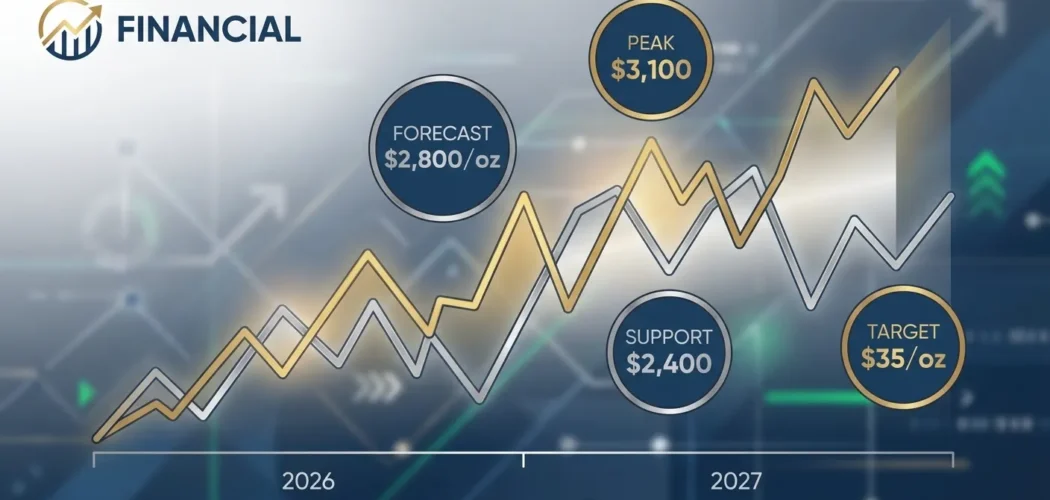
The precious metals market has been a whirlwind of activity, with record-breaking price movements and increased investor interest throughout 2025 and into 2026. For investors like Sarah, understanding these dynamics and future outlooks is crucial for confident decision-making. At Silver Price Gold, we cut through the noise to bring you authoritative insights on gold silver price forecasts, helping you anticipate market shifts and position your portfolio effectively.
As seasoned investors know, market predictions are not guarantees. However, by analyzing expert consensus and key economic indicators, we can gain a clearer perspective. Our goal is to empower you with the knowledge needed to navigate the complexities of precious metals investing, transforming uncertainty into informed action. We believe that with the right guidance, every investor can confidently approach their financial goals, regardless of market conditions. Consequently, understanding the factors influencing these predictions becomes paramount for strategic planning.
Gold’s Remarkable Journey and Future Outlook
Gold prices delivered a truly remarkable performance in 2025, repeatedly reaching new all-time highs, surpassing $4,300 per ounce. This represented a staggering 65.0% increase, its biggest surge since 1979. The momentum continued into early 2026, with gold briefly topping $5,000 per ounce in January, even touching an intraday high of $5,595 on January 29, 2026. While a subsequent 12% tumble later that month showed volatility, by March 2026, gold was still trading robustly around $4,894, up over 13% for January. As of August 2026, the average gold price hovered around $4,360 per troy ounce. Looking ahead, Goldman Sachs Research forecasts gold to reach $4,900 per troy ounce by the end of 2026, while J.P. Morgan Global Research projects an average of $6,000/oz by Q4 2026, potentially rising to $6,300/oz by the end of 2027. These ambitious gold silver price forecasts highlight a strong bullish sentiment.
Several factors contribute to gold’s enduring appeal and these optimistic predictions. Geopolitical tensions, inflation concerns, and a weakening dollar often drive investors towards gold as a safe-haven asset. Furthermore, central bank purchases have consistently provided underlying support for gold prices. For example, many nations view gold as a crucial component of their reserves, enhancing its stability. Historically, gold has demonstrated its ability to preserve wealth during economic uncertainty. Moreover, the global economic landscape continues to present challenges, reinforcing gold’s role as a hedge against volatility. You can find more insights on gold’s performance and expert opinions in articles like Gold: ‘You’re Not Bullish Enough’.
Key Drivers for Gold’s Continued Ascent
The ongoing global economic rebalancing, coupled with persistent inflationary pressures, positions gold favorably. Central banks, in particular, have been significant buyers, accumulating substantial reserves. This trend underscores a broader recognition of gold’s role in portfolio diversification and risk mitigation. For instance, the World Gold Council regularly reports on these purchases, confirming their impact. Additionally, real interest rates, which account for inflation, remain a critical determinant. When real rates are low or negative, the opportunity cost of holding non-yielding gold decreases, making it more attractive. Consequently, many analysts anticipate that these conditions will persist, providing a supportive backdrop for gold prices.
Investment demand also plays a crucial role. Exchange-Traded Funds (ETFs) and physical bullion purchases reflect investor sentiment. As more individuals seek protection against currency devaluation and market instability, gold’s appeal grows. We observe that increased public awareness regarding financial risks often correlates with heightened interest in precious metals. Therefore, educating oneself on these dynamics is essential for making informed investment decisions. This long-term outlook suggests that gold’s upward trajectory is likely to continue for the foreseeable future, making it a cornerstone of many investment strategies.
Silver’s Explosive Growth and Volatility
Silver demonstrated even more explosive growth than gold in 2025, surging an incredible 149.1%. It hit a new all-time spot price high of $55.51 per ounce on October 14, 2025, marking a year-to-date gain of over 60%. The rally extended into early 2026, with silver breaking records and surpassing $58 per ounce. By January 27, 2026, it was priced at an astonishing $111.36 per ounce, representing roughly a 270% increase in just one year from January 2025 levels. However, mirroring gold, silver experienced a sharp correction, plunging 26% on January 30, 2026. Despite this, expert predictions remain strong. J.P. Morgan Global Research forecasts silver prices to reach $63 per ounce in Q4 2026, averaging $70/oz for the year, and $63/oz in 2027. Bank of America anticipates silver to average around $56 in 2026, potentially peaking at $65. The Gold-to-Silver Ratio (GSR), which compressed to approximately 57:1 in January 2026 before expanding back towards 62:1, continues to be a key indicator for silver’s relative value. These gold silver price forecasts indicate a bright future for the white metal.
Silver’s dual nature as both an industrial metal and a precious metal contributes to its unique market dynamics. Its industrial demand is significant, used in solar panels, electronics, and medical applications. As global economies push towards green energy and technological advancements, the demand for silver is projected to increase substantially. Furthermore, its role as a monetary metal, albeit secondary to gold, still holds considerable weight for investors. Therefore, understanding the balance between these two demand drivers is crucial for predicting its price movements. For more detailed Silver News August 2026, you can visit our dedicated news section.
Understanding Silver’s Industrial Demand and Investment Appeal
The industrial sector consumes a significant portion of annual silver production, making it highly sensitive to economic cycles. For example, the rapid expansion of solar energy production has created a robust demand for silver, a key component in photovoltaic cells. This technological demand acts as a floor for prices, even during periods of reduced investment interest. Conversely, its role as a hedge against inflation and economic uncertainty solidifies its position as an investment asset. Therefore, silver often experiences greater price swings than gold due to this combined influence.
Considering these factors, the future outlook for silver remains compelling. Analysts predict continued growth in industrial applications, especially in emerging technologies. Simultaneously, investor interest is expected to remain high, particularly as concerns about inflation and currency stability persist. Consequently, while silver may exhibit higher volatility, its potential for significant gains makes it an attractive option for many portfolios. These dynamics are carefully considered when formulating gold silver price forecasts.
Understanding Volatility in Precious Metals
Both gold and silver experienced increased volatility in 2025-2026, with silver’s volatility jumping by 106% year-to-date in early 2026, compared to gold’s 46%. This higher volatility in silver is primarily attributed to its dual demand base (industrial and investment), its smaller market size, and lower liquidity compared to gold. The dramatic 26% plunge in silver on January 30, 2026, for instance, underscores this inherent characteristic. Understanding these volatility differences is essential for investors, as it influences risk assessment and portfolio allocation strategies. Many factors, including global economic data and geopolitical events, can trigger sharp price movements in the precious metals market.
For instance, significant economic announcements or shifts in central bank policy can rapidly alter investor sentiment. The relationship between Interest Rates and Gold, for example, is a critical factor influencing these fluctuations. Higher interest rates typically increase the opportunity cost of holding non-yielding assets like gold and silver, potentially leading to price declines. Conversely, lower rates tend to make precious metals more attractive. Therefore, closely monitoring monetary policy decisions is a fundamental aspect of precious metals investing. Furthermore, unexpected global events, such as conflicts or pandemics, can trigger flight-to-safety buying, causing prices to surge.
Factors Influencing Precious Metal Price Swings
Several fundamental factors contribute to the inherent volatility observed in both gold and silver markets. Firstly, supply and demand dynamics play a pivotal role. Mining output, recycling rates, and central bank actions all impact the available supply. On the demand side, industrial usage, jewelry consumption, and investment interest constantly fluctuate. Secondly, macroeconomic indicators, such as inflation rates, interest rates, and currency strength, significantly influence investor behavior. A weaker dollar, for instance, often makes dollar-denominated gold and silver more affordable for international buyers, boosting demand. Thirdly, geopolitical events and global uncertainties frequently drive safe-haven demand. Conflicts, political instability, or major economic crises can prompt investors to seek the security of precious metals. Consequently, these interconnected factors create a complex environment where prices can shift rapidly.
Moreover, speculative trading also contributes to short-term price swings. Large institutional investors and hedge funds often take significant positions in the futures markets, which can amplify volatility. The interconnectedness of global financial markets means that events in one region can have ripple effects worldwide, influencing precious metal prices. Therefore, a comprehensive understanding of these various influences is crucial for anyone looking to invest in gold and silver. We continuously monitor these elements to provide accurate gold silver price forecasts.
Long-Term Outlook and Strategic Considerations
Despite short-term volatility, the long-term outlook for gold and silver remains largely positive, according to most experts. The underlying drivers—such as persistent inflation concerns, geopolitical risks, and increasing industrial demand for silver—are expected to provide sustained support. Investors are increasingly recognizing the importance of diversifying their portfolios with precious metals to mitigate risks associated with traditional assets. This strategic allocation helps to balance potential losses in other areas during economic downturns. Therefore, incorporating gold and silver into a well-rounded investment plan is a prudent approach for wealth preservation and growth.
For instance, many financial advisors recommend allocating a certain percentage of a portfolio to precious metals as a hedge against market instability. This approach is particularly relevant in an environment characterized by unpredictable economic cycles and geopolitical tensions. Moreover, the finite nature of these resources means that their intrinsic value is likely to appreciate over time, especially as global demand continues to rise. We strive to provide insights that help you make these long-term strategic decisions with confidence, offering clear and actionable information on various investment options. Our commitment is to empower you through knowledge, fostering a sense of competence in navigating the precious metals market.
Navigating the Future with Confidence
Navigating the complex world of precious metals investing requires a clear understanding of market dynamics and expert projections. At Silver Price Gold, we are dedicated to providing you with the authoritative insights you need to make informed decisions. The gold silver price forecasts for 2026-2027 suggest a continued bullish trend, driven by a confluence of economic and geopolitical factors. While volatility is an inherent characteristic of these markets, particularly for silver, the long-term fundamentals remain strong. Therefore, staying informed and adopting a strategic approach are key to successful precious metals investing. We encourage our readers to continuously educate themselves and consult with financial professionals to tailor strategies to their individual needs.
We believe that knowledge is the ultimate empowerment. By understanding the forces that shape the value of gold and silver, you can transform market noise into actionable intelligence. Our platform aims to be your trusted mentor, simplifying complex topics and offering reliable, expert-led guidance. Consequently, you can confidently build and manage your precious metals portfolio, securing your financial future. We are committed to fostering a community of informed investors who feel equipped to tackle any market challenge. This commitment extends to providing comprehensive resources and up-to-date information, ensuring you always have the most relevant data at your fingertips. Furthermore, we consistently update our News section to keep you abreast of the latest market developments and expert analyses.
Strategic Allocation and Risk Management
A balanced approach to precious metals investing involves not only understanding price predictions but also implementing effective risk management strategies. Diversification within a precious metals portfolio, perhaps by holding both gold and silver, can help mitigate risks. Silver, with its higher volatility, offers greater upside potential but also carries increased risk. Gold, on the other hand, typically provides more stable safe-haven characteristics. Therefore, an investor’s risk tolerance and financial goals should guide their allocation between these two metals. Moreover, considering different forms of investment, such as physical bullion, ETFs, or mining stocks, can further diversify exposure. For those interested in the latter, our Mining News, Mining Stocks, Junior Mining section offers valuable insights.
Furthermore, regular portfolio reviews are crucial to adjust strategies in response to changing market conditions. Economic indicators, global events, and shifts in central bank policies can all necessitate re-evaluation. For example, a sudden increase in interest rates might warrant a re-assessment of your gold holdings. Conversely, rising inflation could strengthen the case for increasing your exposure to precious metals. It is important to remember that investing in precious metals is a long-term strategy, and short-term fluctuations should not deter a well-thought-out plan. We empower you with the tools and information to make these crucial adjustments effectively.
External Market Influences on Precious Metals
Beyond the inherent characteristics of gold and silver, a multitude of external market influences significantly impact their price trajectories. Global economic growth, for instance, directly affects industrial demand for silver. When economies are expanding, manufacturing output typically increases, leading to higher consumption of silver in various applications. Conversely, economic slowdowns can suppress this demand. Moreover, the strength of the US dollar plays a critical role. Since precious metals are primarily denominated in dollars, a stronger dollar makes them more expensive for international buyers, potentially reducing demand and vice versa. Therefore, currency fluctuations are a key consideration when evaluating future price movements. Bloomberg’s commodity futures provide real-time data on these market movements.
Geopolitical stability is another major determinant. Periods of international tension, political unrest, or military conflicts often trigger a flight to safety, with investors seeking refuge in gold. This safe-haven demand can cause significant price surges. For example, heightened tensions in certain regions can quickly drive up gold prices, even if other economic indicators remain stable. Central bank policies, especially regarding interest rates and quantitative easing, also exert considerable influence. Low interest rates tend to support precious metal prices by reducing the opportunity cost of holding non-yielding assets. Furthermore, government debt levels and fiscal policies can impact investor confidence, indirectly affecting precious metals. Kitco News offers comprehensive coverage of these market drivers.
The Role of Inflation and Deflation
Inflationary pressures have historically been a strong driver for gold and silver prices. As the purchasing power of fiat currencies erodes, investors often turn to precious metals as a store of value. Gold, in particular, is widely regarded as a hedge against inflation. During periods of high inflation, the demand for gold tends to increase, pushing prices higher. Conversely, deflationary environments can sometimes put downward pressure on precious metal prices, although their role as a safe haven can still provide support. Therefore, monitoring inflation expectations and actual inflation rates is crucial for predicting price movements. Many economic analysts closely track consumer price indices and producer price indices to gauge inflationary trends, which directly feed into gold silver price forecasts.
Moreover, the market’s perception of future inflation is often as important as current inflation figures. If investors anticipate rising inflation, they may preemptively increase their holdings of precious metals. This forward-looking behavior can create significant momentum in the market. Consequently, understanding the interplay between monetary policy, fiscal policy, and inflation expectations is vital for making informed investment decisions. We empower you to interpret these complex signals, transforming them into clear, actionable insights for your portfolio.
Conclusion: Empowering Your Precious Metals Journey
The journey through the precious metals market, especially when considering the gold silver price forecasts for 2026-2027, can seem daunting. However, with expert guidance and a clear understanding of the underlying dynamics, you can navigate it with confidence. Silver Price Gold is committed to being your trusted mentor, providing authoritative, approachable, and empowering insights. We’ve explored the remarkable performance of gold and silver, the factors driving their volatility, and the long-term outlook shaped by expert predictions. By staying informed about economic indicators, geopolitical events, and market sentiment, you are better equipped to make strategic decisions that align with your financial goals.
Remember, successful investing is about more than just tracking prices; it’s about understanding the narrative behind the numbers and building a resilient portfolio. Whether you are a beginner investor seeking foundational knowledge or an experienced investor looking for advanced market analysis, we are here to support your journey. We encourage you to continue educating yourself, utilizing our resources, and confidently positioning your portfolio for the future. With Silver Price Gold, you gain not just information, but the confidence to thrive in the dynamic world of precious metals investment.
FAQ Section
What are the primary drivers for gold prices in 2026-2027?
Gold prices are expected to be driven by persistent inflation concerns, ongoing geopolitical tensions, central bank purchases, and a potentially weaker US dollar. These factors collectively enhance gold’s appeal as a safe-haven asset and a store of value against economic uncertainties.
Why is silver more volatile than gold?
Silver’s higher volatility stems from its dual demand base: significant industrial use and investment demand. Its smaller market size and lower liquidity compared to gold also contribute to sharper price swings. Industrial demand makes it more sensitive to economic cycles.
How do interest rates affect precious metal valuations?
Interest rates have a significant impact on precious metals. Lower interest rates reduce the opportunity cost of holding non-yielding assets like gold and silver, making them more attractive. Conversely, higher rates can diminish their appeal as investors seek better returns elsewhere.
Should I invest in gold or silver for long-term growth?
Both gold and silver offer potential for long-term growth and portfolio diversification. Gold typically provides more stability as a safe haven, while silver offers higher growth potential due to its industrial demand, albeit with increased volatility. The best choice depends on your individual risk tolerance and investment objectives.
Where can I find reliable predictions for precious metals?
Reliable predictions for precious metals can be found from reputable financial institutions like Goldman Sachs Research and J.P. Morgan Global Research, as well as specialized commodity analysts. Always consider a range of expert opinions and conduct your own research to form a comprehensive view.

