

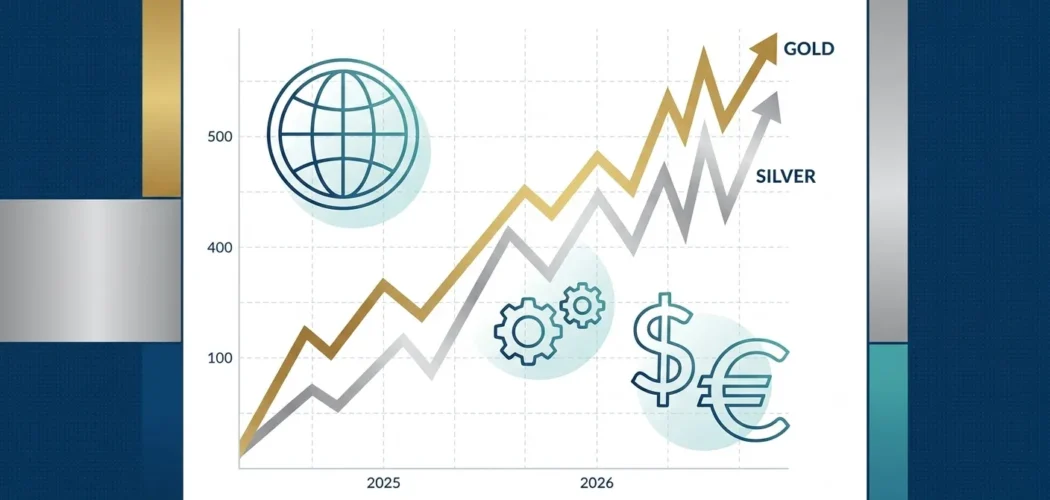
The precious metals market can often feel like a whirlwind of numbers and headlines, especially for new investors like Sarah. The dramatic price movements of 2025 and 2026, with gold and silver reaching unprecedented highs, left many wondering about the underlying forces at play. This gold silver price analysis aims to cut through the noise, providing a clear, expert-led explanation of what happened, why it matters, and what insights you can glean for your investment journey with Silver Price Gold.
Gold’s Record-Breaking Ascent and Current Trajectory
Gold’s performance in 2025 was nothing short of remarkable, repeatedly establishing new all-time highs. It eventually surpassed $4,300 per ounce, marking its biggest increase since 1979. This ascent continued into early 2026, briefly touching an intraday high of $5,595 per ounce in January. However, a 12% tumble followed later that month. By March 2026, gold stabilized around $4,894, still showing significant gains. As of August 2026, the average price hovered around $4,360. You can find more details in our News section.
Experts like Goldman Sachs Research forecast gold to reach $4,900 by the end of 2026. J.P. Morgan Global Research, moreover, projects an average of $6,000/oz by Q4 2026. These movements were primarily fueled by escalating geopolitical uncertainty, persistent inflation fears, and a weakening U.S. dollar. Robust central bank accumulation also played a significant role. For context on historical market shifts, consider the impact of events like Warsh’s Hawkish Jackson Hole Speech Sends Gold Sharply Lower.
Understanding the interplay of these factors is crucial for investors. Geopolitical tensions, for instance, often drive investors towards safe-haven assets like gold. Inflationary pressures, similarly, erode the purchasing power of fiat currencies, making gold an attractive hedge. Furthermore, a depreciating U.S. dollar makes dollar-denominated gold cheaper for international buyers, boosting demand. Central banks, recognizing gold’s stability, have consistently added to their reserves, further underpinning its value. This consistent demand from institutional buyers provides a strong foundation for gold’s price stability, even amidst market corrections.
Silver’s Explosive Growth and Inherent Volatility
Silver, often dubbed ‘poor man’s gold’, proved anything but poor in 2025, surging an astounding 149.1%. It hit a new all-time spot price high of $55.51 per ounce in October 2025. The rally continued into early 2026, breaking records by reaching $111.36 per ounce by January 27, 2026. However, mirroring gold’s correction, silver experienced a sharp 26% decline on January 30, 2026. This higher volatility is inherent to silver, attributed to its dual demand base—both industrial and investment—and its smaller market size compared to gold.
Despite this, forecasts remain optimistic, with J.P. Morgan projecting silver prices to average $70/oz for 2026. This gold silver price analysis highlights silver’s potential for substantial gains, balanced by its characteristic swings. The industrial demand for silver, for example, comes from sectors such as electronics, solar panels, and medical applications. As these industries expand, so does the demand for silver. Meanwhile, investment demand fluctuates with market sentiment, often amplifying price movements. Consequently, silver’s price can react more dramatically to economic shifts than gold.
The dual nature of silver’s demand means it can be influenced by both economic growth and investor sentiment. When industrial activity is strong, silver benefits from increased usage in manufacturing. Conversely, during periods of economic uncertainty, investors may flock to silver as a safe haven, though its industrial ties can also expose it to downturns. This complexity makes silver a fascinating, albeit sometimes challenging, asset for investors to navigate. Staying informed on the latest trends, like those discussed in Silver News August 2026, is therefore essential.
The Gold-to-Silver Ratio: A Key Indicator
Understanding the Gold-to-Silver Ratio (GSR) provides crucial context for precious metals investors. This ratio indicates how many ounces of silver it takes to buy one ounce of gold. It consequently offers insights into relative valuation. In April 2025, the GSR exceeded 100:1, suggesting silver was historically undervalued. This imbalance preceded silver’s significant outperformance later that year, compressing the ratio to approximately 57:1 by January 2026. Following the market correction, the GSR expanded back towards 62:1. As of June 2026, it settled around 60:1, considered the long-run modern average. Monitoring the GSR helps investors identify potential shifts in value between the two metals, informing strategic decisions.
A high GSR typically suggests that silver is undervalued relative to gold, presenting a potential buying opportunity for silver. Conversely, a low GSR might indicate that silver is overvalued, or gold is undervalued. Historically, the ratio has fluctuated significantly, reflecting different market conditions and investor preferences. Understanding this dynamic is a cornerstone of intelligent precious metals investing. For instance, when the GSR is exceptionally high, many investors consider converting some gold holdings into silver, anticipating a future rebalancing. Our continuous gold silver price analysis considers these historical patterns.
Factors Driving Precious Metals Markets in 2025-2026
Several interconnected factors fueled the dramatic movements in gold and silver prices during 2025 and 2026. These include geopolitical events, global economic policies, and shifts in investor sentiment. Each factor played a distinct yet intertwined role in shaping the market landscape.
Geopolitical Uncertainty and Safe-Haven Demand
Escalating geopolitical tensions across various regions created a heightened sense of global instability. Conflicts, political unrest, and international trade disputes prompted investors to seek refuge in safe-haven assets. Gold, in particular, has a long-standing reputation as a store of value during times of crisis. This increased demand for security significantly contributed to its upward trajectory. Silver also benefited, albeit with its characteristic volatility. Events like those discussed in Trump’s Approval Holds at Record Low as US Support for Iran War Falls can impact investor sentiment.
When headlines are dominated by international friction, individuals and institutions alike often reallocate portfolios towards assets perceived as stable. This flight to safety is a predictable response to uncertainty. Therefore, the geopolitical climate of 2025-2026 provided a strong tailwind for precious metal valuations. Investors prioritize capital preservation during such times, making gold and silver attractive alternatives to more volatile investments. This trend underscored the enduring role of precious metals in diversified portfolios.
Persistent Inflationary Pressures
Inflation remained a significant concern throughout 2025 and 2026. Central banks globally grappled with rising consumer prices, leading to widespread fears about the erosion of purchasing power. Both gold and silver are traditionally viewed as hedges against inflation. As the cost of living increased, investors turned to these metals to preserve their wealth. This sustained demand from inflation-conscious investors provided consistent upward pressure on prices. Our gold silver price analysis confirms this trend.
Inflationary environments diminish the real returns on cash and fixed-income investments. Consequently, assets like precious metals, which tend to maintain or increase their value during such periods, become more appealing. The narrative of gold as an inflation hedge is well-established, and the market response in 2025-2026 strongly reaffirmed this perception. Silver, with its industrial applications, also sees increased demand in an inflationary environment as raw material costs rise. This dual benefit further solidified its position.
Weakening U.S. Dollar and Monetary Policy
A weakening U.S. dollar made dollar-denominated commodities, including gold and silver, more affordable for international buyers holding other currencies. This increased global demand contributed to price appreciation. Furthermore, the monetary policies adopted by central banks, particularly concerning interest rates, played a critical role. When interest rates are low or expected to fall, the opportunity cost of holding non-yielding assets like gold decreases, making them more attractive. You can learn more about this in Interest Rates and Gold: How Rates Affect Prices.
Conversely, higher interest rates can make holding gold less appealing, as investors might opt for interest-bearing assets instead. The period of 2025-2026 saw a complex interplay of these factors, with currency fluctuations and central bank pronouncements heavily influencing market sentiment. A cautious approach by central banks towards rate hikes, for example, would typically be bullish for precious metals. Conversely, aggressive tightening could exert downward pressure. This nuanced relationship is a key aspect of our continuous precious metals market assessment.
Central Bank Accumulation and Investor Sentiment
Central banks worldwide continued to accumulate gold at a robust pace throughout this period. Their consistent buying signals confidence in gold as a reserve asset and provides a floor for prices. This institutional demand, combined with strong retail and institutional investor sentiment, created a powerful upward momentum. Positive news and optimistic forecasts from prominent financial institutions further fueled this sentiment, encouraging more investors to enter the market or increase their holdings.
The collective actions of central banks and large institutional investors send powerful signals to the broader market. When these significant players are actively buying, it often inspires confidence among smaller investors. This positive feedback loop can amplify price movements. Moreover, widespread bullish sentiment can create a self-fulfilling prophecy, as increasing demand drives prices higher. However, as seen with the corrections in early 2026, sentiment can shift rapidly, underscoring the importance of a balanced perspective when evaluating market trends and performing a gold and silver market valuation.
The collective actions of central banks and large institutional investors send powerful signals to the broader market. When these significant players are actively buying, it often inspires confidence among smaller investors. This positive feedback loop can amplify price movements. Moreover, widespread bullish sentiment can create a self-fulfilling prophecy, as increasing demand drives prices higher. However, as seen with the corrections in early 2026, sentiment can shift rapidly, underscoring the importance of a balanced perspective when evaluating market trends. This is a critical component of any thorough gold silver price analysis.
Navigating Market Volatility: Lessons for Investors
The dramatic price movements of 2025-2026 offer crucial lessons for investors in precious metals. Understanding these dynamics can empower you to make more informed decisions and navigate future market fluctuations with greater confidence. Volatility, while sometimes unsettling, also presents opportunities for those prepared to act strategically.
The Importance of Diversification
The performance of gold and silver during this period reinforces the value of diversification within an investment portfolio. While both metals saw significant gains, their individual trajectories and volatility levels differed. Including both gold and silver, alongside other asset classes, can help mitigate risk and enhance overall portfolio stability. A diversified approach ensures that no single asset’s underperformance significantly impacts your entire investment. This strategy is foundational to long-term wealth preservation and growth. Many investors, for example, consider a mix of precious metals, equities, and real estate to balance risk and reward.
Understanding Silver’s Unique Volatility
Silver’s more pronounced price swings highlight its unique position in the precious metals market. Its dual demand—industrial and investment—makes it more susceptible to economic cycles than gold. Investors considering silver must acknowledge and be prepared for higher volatility. This means having a longer-term perspective and avoiding impulsive reactions to short-term price fluctuations. While silver offers greater potential for explosive gains, it also carries higher risk. Therefore, a careful assessment of one’s risk tolerance is essential before investing heavily in silver. A comprehensive gold silver price analysis would always highlight this.
Monitoring Key Indicators: The GSR and Beyond
The Gold-to-Silver Ratio proved to be a valuable indicator during 2025-2026, signaling silver’s undervaluation before its significant rally. Beyond the GSR, investors should monitor other key economic indicators such as inflation rates, interest rate policies, and geopolitical developments. Staying informed about these broader market forces provides context for precious metal movements and helps anticipate future trends. Reliable data from sources like the World Gold Council and the Silver Institute are invaluable for this purpose. The World Gold Council offers extensive market intelligence. Similarly, The Silver Institute provides comprehensive data and analysis on the silver market.
A proactive approach to market monitoring allows investors to identify emerging trends and adjust their strategies accordingly. For instance, an anticipated rise in inflation might prompt an investor to increase their gold holdings. Conversely, a period of strong industrial growth could signal a favorable environment for silver. This continuous assessment of market conditions is a hallmark of successful precious metals investing. This continuous assessment of market conditions is a hallmark of successful precious metals investing, and a thorough gold silver price analysis is key to this.
Future Outlook for Gold and Silver
As we look beyond 2026, the future of gold and silver prices will continue to be shaped by a complex interplay of global economic, political, and social factors. While no one can predict the future with certainty, understanding the prevailing trends and potential catalysts can help investors prepare for what lies ahead.
Continued Geopolitical Influences
Geopolitical tensions are unlikely to disappear entirely. Ongoing conflicts, trade disputes, and political uncertainties will likely continue to drive safe-haven demand for gold. Investors should remain vigilant about global events, as these can quickly impact market sentiment and precious metal valuations. The role of gold as a hedge against instability is a fundamental aspect of its appeal, and this characteristic is expected to persist. This makes a consistent gold silver price analysis vital.
Inflationary Pressures and Monetary Policy
The battle against inflation remains a central theme for central banks. Depending on how successfully they manage to control rising prices, gold and silver could either benefit from continued inflation hedging or face headwinds from aggressive interest rate hikes. The balance between economic growth and price stability will be a delicate one, with significant implications for precious metals. Therefore, closely watching central bank announcements and economic data releases is paramount.
Industrial Demand for Silver
The long-term outlook for silver’s industrial demand remains strong, particularly with the global push towards green energy and advanced technologies. The expansion of solar power, electric vehicles, and 5G networks will require substantial amounts of silver. This underlying industrial demand provides a fundamental support for silver prices, irrespective of investment sentiment. Consequently, silver’s dual nature ensures its relevance in both economic booms and busts.
Evolving Investment Landscape
The investment landscape is constantly evolving, with new technologies and financial products emerging. However, the fundamental appeal of gold and silver as tangible assets, stores of value, and hedges against uncertainty is enduring. As more individuals seek to diversify their portfolios and protect their wealth, precious metals will likely continue to attract significant investor interest. This enduring appeal underscores their role in a well-rounded investment strategy. This long-term perspective is crucial for any effective gold silver price analysis.
Conclusion
The period of 2025-2026 provided a vivid demonstration of the dynamic forces at play in the precious metals market. Gold’s steady ascent, driven by safe-haven demand and inflation fears, and silver’s explosive yet volatile growth, underscored their distinct roles in an investment portfolio. The Gold-to-Silver Ratio offered critical insights into their relative valuations, proving its utility as a strategic tool.
For investors like Sarah, the lessons learned from this period are invaluable. Diversification, an understanding of silver’s unique volatility, and continuous monitoring of key indicators are essential for navigating the complexities of the market. Silver Price Gold remains committed to empowering you with the knowledge and insights needed to make confident investment decisions. By staying informed and adopting a strategic approach, you can confidently navigate the exciting world of precious metals investing, regardless of future market shifts. This thorough gold silver price analysis serves as a guide for your journey.
FAQ
What caused gold prices to reach record highs in 2025-2026?
Gold prices surged due to a combination of factors including escalating geopolitical uncertainty, persistent inflation fears, a weakening U.S. dollar, and robust central bank accumulation. These elements collectively drove investors towards gold as a safe-haven asset and an inflation hedge.
Why is silver more volatile than gold?
Silver exhibits higher volatility primarily due to its dual demand base. It is used extensively in industrial applications, making its price susceptible to economic cycles. Additionally, its smaller market size compared to gold means that less capital is required to move its price significantly, leading to more pronounced swings.
How does the Gold-to-Silver Ratio help investors?
The Gold-to-Silver Ratio (GSR) indicates how many ounces of silver it takes to buy one ounce of gold. A high GSR suggests silver is undervalued relative to gold, potentially signaling a buying opportunity for silver. Conversely, a low GSR might indicate silver is overvalued, or gold is undervalued, helping investors identify relative value shifts.
What role do central banks play in precious metal prices?
Central banks play a significant role by accumulating gold as a reserve asset, which signals confidence in its value and provides a floor for prices. Their monetary policies, particularly regarding interest rates, also influence the opportunity cost of holding non-yielding assets like gold, thereby impacting investor demand.
What should new investors consider when investing in precious metals?
New investors should consider diversification within their portfolio, acknowledging silver’s inherent volatility, and continuously monitoring key economic and geopolitical indicators. Understanding these dynamics and adopting a long-term perspective can help in making informed decisions and navigating market fluctuations effectively.

