

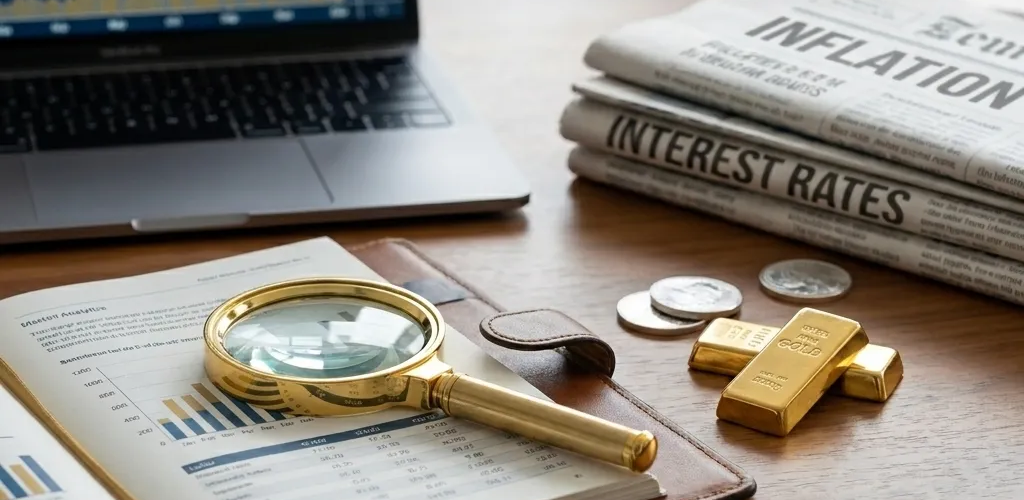
As a cautious investor, understanding why markets move can feel like deciphering a complex code. But what if you could understand the fundamental forces behind the value of your precious metals? For those seeking to confidently navigate the market, understanding how economic indicators gold price movements are connected is crucial. Gold isn’t just a shiny metal; it’s a barometer for global economic health, influenced by a clear set of economic signals. Here at Silver Price Gold, we empower you to decode these signals, transforming confusion into clarity.
The Core Connection: Why Gold Reacts to the Economy
Gold has historically served as a safe-haven asset and a hedge against inflation. When economic uncertainty looms, or the value of traditional currencies erodes, investors often flock to gold as a store of value. This inherent role means that gold’s price is deeply intertwined with broader economic performance and expectations. Unlike stocks or bonds, gold doesn’t generate earnings or pay dividends, making its appeal primarily tied to its perceived stability and intrinsic value in times of distress.
Key Economic Indicators Gold Price Movements Track
Several macroeconomic factors consistently influence the gold market. Knowing these allows you to anticipate potential shifts rather than merely reacting to them.
Inflation: The Erosion of Purchasing Power
Inflation, the rate at which the general level of prices for goods and services is rising, is a significant driver for gold. When inflation accelerates, the purchasing power of fiat currencies (like the US dollar) diminishes. In such scenarios, gold becomes an attractive asset because it tends to maintain its real value. Investors buy gold to protect their wealth from inflationary pressures, leading to an increase in its demand and, consequently, its price. Monitoring inflation reports, such as the Consumer Price Index (CPI), can offer early insights into this dynamic.
Interest Rates: The Opportunity Cost of Gold
Central bank interest rate decisions, particularly by the US Federal Reserve, have a profound impact on gold. Gold is a non-yielding asset, meaning it doesn’t pay interest. When real interest rates (nominal interest rates minus inflation) rise, holding interest-bearing assets like bonds becomes more attractive relative to gold. Conversely, when real interest rates are low or negative, the opportunity cost of holding gold decreases, making it more appealing. Keep an eye on Federal Open Market Committee (FOMC) announcements for clues on future interest rate directions.
Gross Domestic Product (GDP): A Barometer of Economic Health
Gross Domestic Product (GDP) measures the total value of goods and services produced in a country. A strong GDP growth typically signals a healthy economy, which might reduce the demand for safe-haven assets like gold as investors seek higher returns in riskier assets. Conversely, a weakening GDP can heighten economic anxieties, prompting investors to seek the security of gold. Understanding GDP trends, therefore, provides valuable context for assessing gold’s potential trajectory.
Currency Strength: The Dollar’s Dominance
The US dollar’s strength plays a critical role in determining the price of gold. Gold is primarily priced in US dollars globally. Consequently, a stronger dollar makes gold more expensive for investors holding other currencies, potentially dampening demand. Conversely, a weaker dollar makes gold cheaper and more attractive. Therefore, monitoring the US Dollar Index (DXY) is essential for anyone tracking precious metals. This inverse relationship is a cornerstone of understanding how currency markets affect gold’s valuation.
Geopolitical Events and Global Uncertainty
Beyond purely economic figures, geopolitical tensions, political instability, and global crises significantly influence the appeal of gold. Events such as wars, trade disputes, or widespread pandemics often trigger a flight to safety, with investors seeking the perceived security of gold. These events create uncertainty, making traditional investments seem riskier. As a result, gold’s status as a universal safe haven strengthens during such times, driving up its price. This highlights gold’s role as more than just an investment, but a protector of wealth.
Government Debt and Fiscal Policy
High levels of government debt and unsustainable fiscal policies can erode investor confidence in a nation’s currency and economic stability. When governments incur substantial debt, concerns about inflation or currency devaluation often emerge. This can lead investors to diversify into assets like gold. Furthermore, fiscal stimulus measures, while intended to boost the economy, can also lead to inflationary pressures, making gold a more attractive hedge. Understanding the broader fiscal landscape is thus crucial for anticipating shifts in the demand for precious metals.
The Interplay: How Economic Indicators Gold Price Dynamics Combine
It’s important to recognize that these economic indicators do not operate in isolation. Instead, they interact in complex ways, creating a dynamic environment for gold prices. For example, high inflation combined with low real interest rates creates a very bullish environment for gold. Conversely, strong economic growth coupled with rising interest rates might put downward pressure on gold. Our goal at Silver Price Gold is to help you see these connections clearly, empowering you to make informed decisions.
Consider a scenario where the Consumer Price Index (CPI) shows accelerating inflation, while the Federal Reserve signals a cautious approach to raising interest rates. In this environment, real interest rates would likely remain low or even turn negative. Consequently, the opportunity cost of holding gold decreases, and its appeal as an inflation hedge increases. This confluence of factors often leads to a significant upward movement in the price of gold.
Conversely, imagine a period of robust GDP growth, indicating a strong economy, alongside aggressive interest rate hikes from the central bank. In this situation, investors might shift capital from gold into higher-yielding assets like stocks or bonds, as the opportunity cost of holding a non-yielding asset rises. Therefore, the price of gold would likely face downward pressure. The nuanced relationship between these factors underscores why a holistic view is essential when analyzing economic indicators gold price movements.
Beyond the Headlines: Deeper Insights into Precious Metals Valuation
While the primary economic indicators provide a robust framework, a deeper understanding of precious metals valuation requires looking beyond superficial headlines. For instance, global supply and demand dynamics, including mining output and central bank gold reserves, also play a role. Increased mining costs or reduced output can constrain supply, potentially supporting higher prices. Similarly, significant gold purchases or sales by central banks can have a notable impact on market sentiment and prices.
Moreover, investor sentiment and market psychology are powerful, albeit less quantifiable, factors. Fear, greed, and the overall perception of risk can drive significant capital flows into or out of gold. During periods of extreme market volatility, the emotional response of investors can sometimes override fundamental economic signals in the short term. This highlights the importance of combining quantitative analysis with a qualitative understanding of market mood.
For those interested in exploring different investment avenues, understanding how various assets perform under different economic conditions is vital. For example, while gold often thrives in uncertainty, other commodities like crude oil have their own unique drivers. You can learn more about these dynamics in our Complete Guide to Crude Oil Trading.
Empowering Your Investment Journey with Clear Analysis
Navigating the precious metals market requires more than just instinct; it demands a clear understanding of the forces at play. By diligently tracking the key economic indicators gold price and other precious metals respond to, you gain a significant advantage. This knowledge empowers you to anticipate shifts, rather than being reactive, fostering a sense of confidence in your investment decisions.
Our mission at Silver Price Gold is to demystify these complex relationships. We believe that every investor, regardless of experience level, deserves access to clear, authoritative, and actionable insights. By understanding how the global economy impacts your gold and silver holdings, you are better equipped to protect and grow your wealth. This foundational knowledge is what transforms a cautious investor into a confident one.
For those looking to deepen their understanding, we offer a range of resources. Our Market Guides provide comprehensive insights into various aspects of precious metals and broader market trends. Additionally, staying informed through reputable financial news sources, such as the Federal Reserve and the International Monetary Fund (IMF), can further enhance your analytical capabilities. Continuous learning is a hallmark of successful investing.
The Future of Gold and Economic Signals
Looking ahead, the relevance of these economic signals to gold’s valuation will only intensify. As global economies continue to evolve, influenced by factors like technological advancements, changing demographics, and environmental concerns, the interplay between these forces and precious metals will remain dynamic. Therefore, a consistent monitoring of economic indicators gold price movements is not merely a practice for today but a strategy for future resilience.
For instance, the rise of digital currencies introduces a new layer of complexity. While not directly an economic indicator in the traditional sense, the adoption and regulation of cryptocurrencies could influence investor sentiment towards traditional safe havens. However, gold’s millennia-long history as a store of value provides a strong precedent that digital assets have yet to establish. This enduring appeal underscores its unique position in a diverse investment portfolio.
Furthermore, the ongoing debate around global reserve currencies and the potential for a multipolar world order could also impact gold’s role. If confidence in any single fiat currency wavers, gold could see renewed interest as a neutral, universally accepted asset. These broader macroeconomic shifts warrant close attention, as they can redefine the very landscape in which precious metals operate.
Conclusion: Your Path to Confident Precious Metals Investing
Understanding the intricate relationship between economic indicators gold price and other precious metals is not just about tracking numbers; it’s about gaining a profound insight into global economic health. From inflation eroding purchasing power to interest rates dictating opportunity costs, and GDP reflecting overall vitality, each indicator tells a part of gold’s story. Geopolitical events and currency fluctuations further weave into this complex tapestry.
At Silver Price Gold, we are committed to providing you with the clarity and confidence needed to navigate these waters. By empowering you with expert knowledge and actionable insights, we aim to transform market confusion into a clear, strategic advantage. Embrace this understanding, and let it guide your precious metals investment journey towards greater security and growth. Your journey to becoming a more informed and confident investor starts here.
Should you have further questions, our FAQ section offers quick answers to common inquiries, and you can always Get in Touch with our team for personalized guidance.
FAQ
What are the primary economic indicators that affect gold prices?
The primary economic signals influencing gold include inflation rates (like CPI), interest rates set by central banks (like the Fed), Gross Domestic Product (GDP) growth, and the strength of the US dollar. Geopolitical events and global uncertainty also play a significant role.
How does inflation specifically impact the value of gold?
Inflation erodes the purchasing power of fiat currencies. When prices rise rapidly, investors often turn to gold as a hedge, meaning they buy it to protect their wealth from devaluation, which typically drives up its demand and price.
Why do interest rates have an inverse relationship with gold’s appeal?
Gold is a non-yielding asset. When real interest rates rise, interest-bearing investments become more attractive, increasing the opportunity cost of holding gold. Conversely, low or negative real interest rates make gold more appealing, as it offers a store of value without a significant opportunity cost.
Does the US dollar’s strength always affect gold prices negatively?
Generally, yes. Gold is priced in US dollars globally. A stronger dollar makes gold more expensive for international buyers using other currencies, which can dampen demand. Conversely, a weaker dollar makes gold cheaper and more attractive.
How do global events and uncertainty influence precious metals?
Global events such as wars, political instability, or pandemics often trigger a