

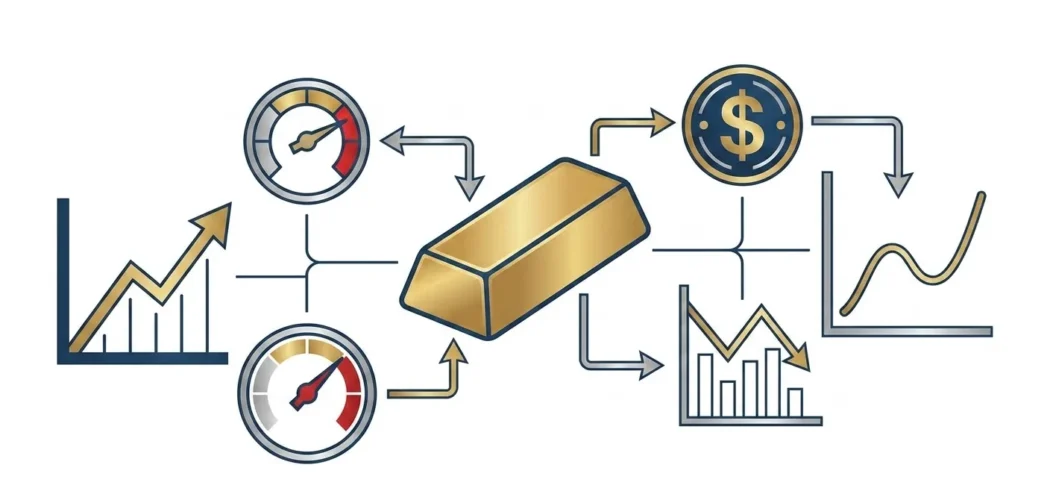
Understanding the interplay between gold and key economic indicators is fundamental for any investor, especially for those navigating the precious metals market for the first time. The behavior of gold economic indicators often provides clear signals about potential shifts in gold prices, helping you make more informed decisions. By observing how gold reacts to various economic forces, you can begin to build a more resilient and strategic investment approach. This knowledge empowers you to confidently navigate investments, aligning your decisions with broader economic trends and strengthening your portfolio against potential headwinds.
For beginners, the sheer volume of market data can feel overwhelming. However, by focusing on a few critical economic signals, you can demystify gold’s movements. Our aim is to provide clarity and confidence, transforming complex market information into actionable insights. We believe that a well-informed investor is an empowered investor, capable of making sound decisions even amidst market volatility.
Deciphering Interest Rates and Gold
One of the most significant economic indicators influencing gold prices is interest rates. Generally, there’s an inverse relationship between interest rates and the price of gold. When central banks raise interest rates, it increases the appeal of interest-bearing assets like bonds, making non-yielding assets like gold less attractive by comparison. Consequently, the demand for gold may decrease, leading to potential price softening.
Conversely, when interest rates are low or falling, the opportunity cost of holding gold decreases. This often leads to increased demand and higher prices. For example, investors might choose gold over bonds when bond yields are negligible. This dynamic is particularly important for cautious investors seeking safe-haven assets during periods of economic uncertainty. To deepen your understanding of this crucial relationship, consider exploring our detailed analysis on Interest Rates and Gold: How Rates Affect Prices. This resource provides further context on how central bank policies shape the precious metals landscape.
Furthermore, real interest rates, which account for inflation, are often a more accurate predictor of gold’s performance. When real interest rates are low or negative, gold tends to perform well. This is because the return on traditional fixed-income investments is eroded by inflation, making gold a more attractive store of value. Therefore, monitoring both nominal and real interest rates offers a more comprehensive view of gold’s potential trajectory.
The Federal Reserve’s Influence on Gold
The actions and statements of the US Federal Reserve are particularly influential regarding interest rates. Their monetary policy decisions, such as adjustments to the federal funds rate, send ripple effects throughout global markets, directly impacting the perceived value of gold. For instance, a hawkish stance from the Fed, signaling future rate hikes, can pressure gold prices downward. We saw this dynamic play out when Warsh’s Hawkish Jackson Hole Speech Sent Gold Sharply Lower, illustrating the immediate market reaction to central bank rhetoric.
Investors closely scrutinize every Federal Open Market Committee (FOMC) meeting and the accompanying statements. These provide critical clues about the future direction of interest rates. Understanding the Fed’s dual mandate—maintaining maximum employment and stable prices—helps explain their policy decisions. These decisions, in turn, are key gold economic indicators that every investor should track. Moreover, the market’s expectation of future rate changes can sometimes have as much impact as the actual changes themselves. Therefore, staying informed about market sentiment surrounding Fed policy is also vital.
Inflation’s Role: Gold as a Hedge
Inflation is another powerful force that impacts gold prices. Gold has historically been considered a reliable hedge against inflation. When the purchasing power of fiat currencies erodes due to inflation, investors often turn to gold to preserve their wealth. This demand drives up gold’s price, serving as a protective mechanism against the loss of value in traditional currencies. For someone like Sarah, the Cautious Newbie, understanding gold’s role as an inflation hedge can provide significant peace of mind when considering long-term financial security.
The Consumer Price Index (CPI) is a widely watched inflation gauge. A rising CPI often correlates with increased investor interest in gold. Furthermore, the Producer Price Index (PPI) can offer an early indication of inflationary pressures building in the economy. When producers face higher costs, these are often passed on to consumers, eventually manifesting as higher consumer prices. Consequently, tracking both CPI and PPI provides a holistic view of inflationary trends.
Understanding Different Inflation Measures
While CPI is common, other measures like the Personal Consumption Expenditures (PCE) price index are also important. The Federal Reserve, for instance, often favors the PCE index for its broader coverage of consumer spending. When Gold Looks to PCE Inflation, Jackson Hole for Direction Next Week, it highlights the significance of these diverse measures. Each index offers a slightly different perspective on the rate at which prices are rising, and a comprehensive understanding requires considering several viewpoints.
Hyperinflationary environments typically see gold prices skyrocket as confidence in paper money collapses. Even moderate inflation, however, can make gold an attractive alternative to cash or low-yielding bonds. This is because gold, unlike fiat currency, cannot be printed by central banks, thus retaining its intrinsic value. Therefore, observing various inflation-related gold economic indicators is paramount for investors seeking to protect their purchasing power.
The US Dollar and Gold’s Intertwined Fate
Finally, the strength of the US dollar plays a crucial role in gold’s valuation. Since gold is typically priced in US dollars, a stronger dollar makes gold more expensive for holders of other currencies, potentially dampening demand. Conversely, a weaker dollar makes gold more affordable and attractive, often leading to an increase in its price. Monitoring the US Dollar Index (DXY) can therefore offer valuable insights into potential gold price movements, providing an additional layer of analysis for your precious metals strategy.
A strong dollar environment can make dollar-denominated assets, including gold, appear less appealing to international buyers. This inverse relationship is fundamental to understanding gold’s short-term price fluctuations. Traders often watch the DXY closely for immediate signals regarding gold’s direction. Therefore, a weakening dollar is generally considered a positive signal for gold prices, making it one of the key gold economic indicators to observe.
Global Economic Events and the Dollar’s Strength
Various global economic events can influence the US dollar’s strength. Geopolitical tensions, for example, often lead to a flight to safety, strengthening the dollar as investors seek refuge in US Treasuries. This, in turn, can put downward pressure on gold. However, if the geopolitical event is severe enough to spark widespread fear, gold’s safe-haven appeal might override the dollar’s strength, causing both to rise simultaneously.
Conversely, positive economic data from other major economies can weaken the dollar as capital flows to those regions. This makes gold relatively cheaper and more attractive. For instance, robust economic growth in Europe or Asia could divert investment from the US, leading to a weaker dollar and a stronger gold price. Consequently, keeping an eye on global economic health is indirectly monitoring gold economic indicators. Furthermore, understanding the interplay between global financial markets and currency movements is essential for a nuanced perspective on gold’s performance.
Understanding Geopolitical Risks and Gold
Beyond the core economic figures, geopolitical risks also significantly impact gold prices. Gold has historically served as a safe-haven asset during times of political instability, military conflicts, or major international crises. When uncertainty looms, investors often flock to gold, perceiving it as a reliable store of value when other assets are volatile. This surge in demand drives prices upward, making global events crucial gold economic indicators.
For example, heightened tensions in key regions or unexpected political shifts can trigger immediate reactions in the gold market. The market’s response to such events often highlights gold’s role as a hedge against systemic risk. While not a traditional economic statistic, the level of global political stability is undeniably a critical factor in gold’s valuation. Therefore, staying informed about international developments is just as important as tracking financial reports.
Impact of Global Crises on Gold Demand
Major global crises, whether economic or political, tend to bolster gold’s appeal. During the 2008 financial crisis, for instance, gold saw significant gains as investors sought refuge from collapsing equity markets. Similarly, during periods of heightened military conflict, gold prices often climb. This behavior underscores gold’s enduring status as an emergency asset. It’s a tangible asset that retains value when confidence in financial institutions or national currencies wavers.
Consider scenarios like a trade war or a pandemic; these can disrupt supply chains and economic stability, leading investors to seek the security of gold. The perceived safety of gold during such times makes it an indispensable component of a diversified portfolio. Thus, while not always quantifiable in traditional economic terms, the backdrop of global stability is a powerful driver for gold prices. It’s an overarching factor that influences many other gold demand trends. The World Gold Council provides valuable insights into these global demand shifts.
Supply and Demand Dynamics for Gold
While economic indicators are crucial, the fundamental principles of supply and demand also dictate gold prices. Mine production, recycling efforts, and central bank purchases all contribute to the supply side. Conversely, jewelry demand, industrial applications, and investment demand (ETFs, bars, coins) constitute the demand side. An imbalance in either can significantly sway prices, regardless of other macroeconomic factors.
For instance, a discovery of a major new gold deposit could, in theory, increase supply and depress prices over the long term. Conversely, a surge in demand from emerging markets could push prices higher. Understanding these inherent market forces provides a more complete picture of gold’s valuation. Furthermore, advancements in Mining News, Mining Stocks, Junior Mining can offer insights into future supply trends.
The Role of Central Banks and Gold Reserves
Central banks worldwide hold significant gold reserves, and their buying or selling activities can have a substantial impact on the market. When central banks increase their gold holdings, it signals confidence in gold as a reserve asset and adds to overall demand. This, in turn, can support higher prices. Conversely, large-scale selling by central banks can depress prices. Therefore, monitoring central bank activities is another important element in understanding gold economic indicators.
These institutions often view gold as a diversification tool and a hedge against currency fluctuations. Their strategic decisions are not just about monetary policy but also about national economic stability. Consequently, official sector transactions are closely watched by market participants. For example, reports on central bank gold purchases often lead to immediate market reactions, demonstrating their influence on gold’s trajectory. You can often find detailed reports on central bank activities from reputable sources like the International Monetary Fund (IMF), which tracks global financial statistics.
Market Sentiment and Speculation
Beyond hard economic data, market sentiment and speculative activity also play a significant role in gold’s price movements. Investor psychology, news cycles, and the overall mood of the market can amplify or dampen the effects of underlying economic indicators. Fear and greed, while not economic data points, are powerful drivers in the gold market.
Large institutional investors and hedge funds often take significant positions in gold futures, and their collective actions can create momentum that influences prices. Positive news or a shift in sentiment can lead to a buying frenzy, while negative news can trigger sell-offs. This speculative element adds another layer of complexity to predicting gold’s trajectory, making it crucial to consider alongside other gold economic indicators. Furthermore, the rapid dissemination of news through financial media means that market sentiment can shift very quickly, requiring investors to remain agile.
Technical Analysis and Gold Trading
Many traders also rely on technical analysis, studying price charts and patterns to predict future movements. While fundamental analysis focuses on economic data, technical analysis looks at market behavior itself. Indicators like moving averages, relative strength index (RSI), and Bollinger Bands are used to identify trends, support levels, and resistance levels. When combined with an understanding of economic fundamentals, technical analysis can provide a more robust trading strategy.
For example, a breakout above a key resistance level on a gold chart, especially when supported by positive economic news, can signal a strong buying opportunity. Conversely, a break below a support level, combined with unfavorable economic data, might suggest a bearish outlook. Therefore, integrating technical analysis with the observation of gold economic indicators offers a powerful framework for decision-making. This holistic approach allows investors to capitalize on both the underlying economic currents and the immediate market psychology.
Conclusion: Empowering Your Gold Investment Journey
Understanding the intricate relationship between gold and key economic indicators — interest rates, inflation, the US dollar, geopolitical risks, and supply-demand dynamics — is not just academic; it’s empowering. By carefully observing these forces, you gain a clearer perspective on the factors shaping the precious metals market. This knowledge allows you to move beyond reactive decisions and adopt a proactive, strategic approach to your gold investments.
At Silver Price Gold, we believe in providing you with the tools and insights to confidently navigate these markets. Our goal is to simplify complex information, ensuring you feel equipped to make informed choices that align with your financial objectives. By consistently monitoring these gold economic indicators, you strengthen your portfolio against potential headwinds and position yourself for long-term success in the precious metals arena. Embrace this expert-led guidance to build a resilient and thriving investment future.
FAQ
How do interest rate changes affect gold prices?
Interest rate changes generally have an inverse relationship with gold prices. When interest rates rise, interest-bearing assets become more attractive, reducing demand for non-yielding gold. Conversely, lower interest rates make holding gold more appealing, often increasing its price.
Why is gold considered a hedge against inflation?
Gold is considered an inflation hedge because it tends to retain its purchasing power when fiat currencies lose value due to inflation. Investors flock to gold to preserve wealth during inflationary periods, driving its price up.
What is the relationship between the US dollar and gold?
Gold is typically priced in US dollars, so a stronger dollar makes gold more expensive for international buyers, potentially lowering demand. A weaker dollar, however, makes gold more affordable and often leads to higher prices.
How do geopolitical events influence gold’s value?
Geopolitical events, such as political instability or conflicts, often increase gold’s value. Gold is seen as a safe-haven asset during times of uncertainty, leading investors to seek its security and driving up demand and prices.
What other factors besides economic data impact gold prices?
Beyond traditional economic data, gold prices are also influenced by supply and demand dynamics, central bank activities, market sentiment, and speculative trading. These factors collectively contribute to gold’s overall market valuation.

