

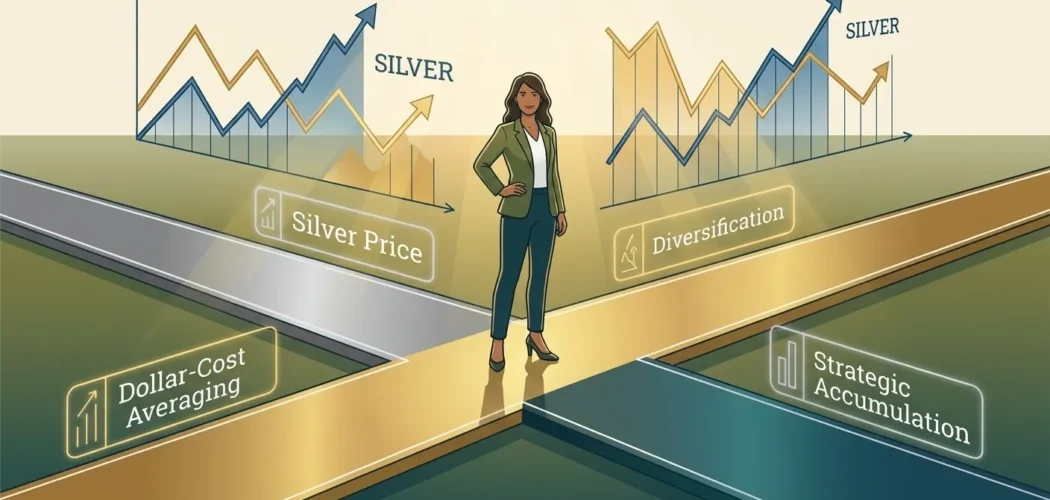
For investors like Sarah, the idea of entering a volatile market can be daunting. The precious metals market in 2025-2026, with its record highs and sharp corrections, certainly demonstrated significant price swings. Gold briefly surpassed $5,000 per ounce, then tumbled 12%, while silver surged over 270% in a year before plunging 26% in a single day. This kind of movement can trigger caution; however, it also presents unique opportunities for those equipped with smart strategies for gold and silver. At Silver Price Gold, we empower you to approach these conditions with confidence, not fear.
Understanding Volatility: Opportunity, Not Just Risk
Volatility, while unsettling, is a natural part of any market. For precious metals, it’s often amplified by their role as safe havens and industrial commodities. Silver, in particular, saw its volatility jump by 106% year-to-date in early 2026, compared to gold’s 46%. This higher volatility is due to its dual demand base (industrial and investment) and smaller market size. Rather than shying away, we teach you to understand and harness these movements. The key isn’t to avoid volatility, but to implement tactics that mitigate risk and capitalize on price fluctuations. Indeed, understanding market behavior is the first step towards successful investing.
Essential Smart Strategies for Gold and Silver Markets
Navigating the dynamic landscape of precious metals requires a disciplined approach. We present several essential methods to help you manage risk and identify potential gains, particularly during periods of increased market activity. These approaches are designed to build resilience into your investment portfolio.
1. Dollar-Cost Averaging (DCA)
Dollar-Cost Averaging is a cornerstone for cautious investors. Instead of trying to time the market by making one large purchase, DCA involves investing a fixed amount of money at regular intervals, for example, monthly. When prices are high, your fixed amount buys fewer ounces; conversely, when prices are low, it acquires more. Over time, this averages out your purchase price, significantly reducing the impact of short-term volatility. This method is particularly effective in markets like 2025-2026, where prices fluctuated wildly, smoothing out the peaks and troughs of your investment journey.
2. Diversification Beyond Precious Metals
While gold and silver are excellent diversifiers for your existing portfolio, such as a 401k, it’s also wise to diversify *within* your precious metals holdings. Consider a balanced allocation between gold and silver, and potentially other assets. Gold often acts as a more stable hedge, offering consistent value, while silver provides higher growth potential but also greater volatility. Therefore, a thoughtful allocation can provide both stability and opportunity. Furthermore, exploring other asset classes alongside precious metals can further fortify your overall investment strategy.
3. Focus on Long-Term Goals
Short-term price swings can be distracting and lead to impulsive decisions. Remember, precious metals are often acquired for long-term wealth preservation, inflation protection, and portfolio stability. J.P. Morgan Global Research forecasts gold to average $6,000/oz by Q4 2026 and silver to average $70/oz for the year, according to a recent report. Keeping these long-term outlooks in mind helps you ride out immediate fluctuations and avoid impulsive decisions based on daily news. Patience, in fact, is a virtue in precious metals investing.
4. Utilize the Gold-to-Silver Ratio (GSR)
The Gold-to-Silver Ratio can be a powerful tool for strategic allocation. When the ratio is historically high, for instance, exceeding 100:1 in April 2025, it suggests silver is undervalued relative to gold, potentially indicating a good time to consider converting some gold to silver. Conversely, a historically low ratio might suggest the opposite. Understanding this ratio allows investors to make informed decisions about their precious metals holdings, optimizing their positions. This is one of the key smart strategies for gold and silver investors to consider.
Advanced Approaches for Market Navigation
Beyond the foundational strategies, there are more refined techniques that experienced investors employ to further enhance their position in volatile precious metals markets. These methods require a deeper understanding of market dynamics and a proactive approach.
5. Understanding Economic Indicators
Precious metals prices are often influenced by global economic indicators. For instance, inflation concerns typically bolster gold’s appeal as a hedge, while industrial demand for silver can surge during periods of economic growth. Pay attention to reports on inflation, interest rates, and global economic stability. For example, understanding how interest rates affect gold and silver prices can be crucial. Monitoring these indicators provides insight into potential price movements, allowing for more proactive adjustments to your holdings. Therefore, staying informed is paramount.
6. Technical Analysis for Entry and Exit Points
While long-term investing is key, technical analysis can help identify optimal entry and exit points for purchases and sales. Studying chart patterns, support and resistance levels, and moving averages can provide signals. For example, a sustained break above a resistance level might indicate upward momentum, while falling below a support level could signal a potential correction. This approach, when combined with fundamental analysis, forms a comprehensive strategy for precious metals. However, it requires practice and a solid grasp of charting principles. These are important smart strategies for gold and silver traders.
7. Risk Management with Stop-Loss Orders
For those actively trading, implementing stop-loss orders can limit potential losses during sharp market downturns. A stop-loss order automatically sells your position if the price falls to a predetermined level. This protects capital and prevents emotional decisions during rapid declines. While not suitable for all long-term investors, it’s a vital tool for managing risk in more dynamic trading scenarios. Consequently, it helps preserve capital for future opportunities. This is a critical component of any comprehensive risk management plan.
8. Consider Physical vs. Paper Assets
The choice between physical gold and silver versus paper assets, such as ETFs or mining stocks, also plays a role in navigating volatility. Physical metals offer direct ownership and protection against systemic risk, while paper assets provide liquidity and ease of trading. Each has its advantages and disadvantages depending on your investment goals and risk tolerance. For instance, you might consider diversifying between both forms. Furthermore, understanding the nuances of each type of asset is essential for making informed decisions. For more insights on related news, visit our News section.
The Role of Geopolitical Events and News
Geopolitical tensions and significant global events frequently impact precious metals prices. Gold, in particular, often acts as a safe haven during times of political uncertainty or economic instability. For example, news related to international conflicts or major policy shifts can send gold prices soaring. Being aware of these global developments is crucial for anticipating market reactions. For further context, consider how Warsh’s Hawkish Jackson Hole Speech Sent Gold Sharply Lower. This highlights the sensitivity of the market to expert commentary and economic policy.
Silver, with its industrial demand component, can also react to news related to technological advancements or manufacturing outlooks. Therefore, a holistic understanding of both economic and geopolitical landscapes is part of developing effective smart strategies for gold and silver. We encourage our investors to stay informed by following reputable news sources and expert analyses. For example, sources like Bloomberg or The Wall Street Journal provide excellent coverage of global markets.
Building Resilience with Smart Strategies for Gold and Silver
The journey through volatile precious metals markets requires more than just an understanding of price movements; it demands resilience and a well-thought-out plan. Our approach at Silver Price Gold focuses on empowering you with the knowledge and tools to not only survive but thrive in these conditions. By integrating the smart strategies for gold and silver discussed, you can build a portfolio that withstands market turbulence and capitalizes on opportunities.
Remember, volatility is an inherent characteristic of financial markets. Rather than fearing it, view it as an opportunity to apply disciplined investment principles. Whether through dollar-cost averaging, strategic diversification, or utilizing the gold-to-silver ratio, each method contributes to a robust investment framework. We are committed to being your guiding mentor, providing the clarity and confidence needed to navigate your precious metals investments effectively.
In conclusion, while the precious metals market can exhibit significant swings, employing well-researched and disciplined smart strategies for gold and silver is paramount. These include focusing on long-term goals, understanding market indicators, and applying techniques like dollar-cost averaging. By adopting these principles, investors can transform potential risks into opportunities, ensuring their wealth preservation and growth. Consequently, confidence in your investment approach will naturally grow. For continuous updates and market analysis, be sure to check our Silver News August 2026.
Frequently Asked Questions About Precious Metals Investing
What is the best way to start investing in gold and silver?
Starting with dollar-cost averaging is often recommended, especially for beginners. This involves investing a fixed amount regularly, which helps average out your purchase price over time and reduces the impact of short-term price fluctuations. It’s a disciplined approach to building your holdings.
How can I protect my investments during market downturns?
Diversification is key. Beyond diversifying your overall portfolio, consider a balanced allocation within your precious metals holdings. Gold typically offers more stability, while silver provides higher growth potential but also greater volatility. Focusing on long-term goals also helps you ride out temporary declines.
Is silver a better investment than gold in volatile markets?
Silver can offer higher growth potential due to its dual industrial and investment demand, but it also comes with greater volatility. Gold, conversely, is often seen as a more stable safe haven. The choice depends on your risk tolerance and investment objectives. Many investors hold both for balance.
What is the Gold-to-Silver Ratio and how is it used?
The Gold-to-Silver Ratio (GSR) indicates how many ounces of silver it takes to buy one ounce of gold. A historically high GSR suggests silver may be undervalued relative to gold, potentially signaling a good time to convert some gold to silver. Conversely, a low GSR might suggest the opposite, guiding strategic allocation decisions.
How do economic events influence precious metals prices?
Economic events such as inflation, interest rate changes, and geopolitical tensions significantly impact precious metals. Gold often acts as a hedge against inflation and uncertainty, while silver’s price is also influenced by industrial demand. Staying informed about these global factors is crucial for making informed investment decisions.

