

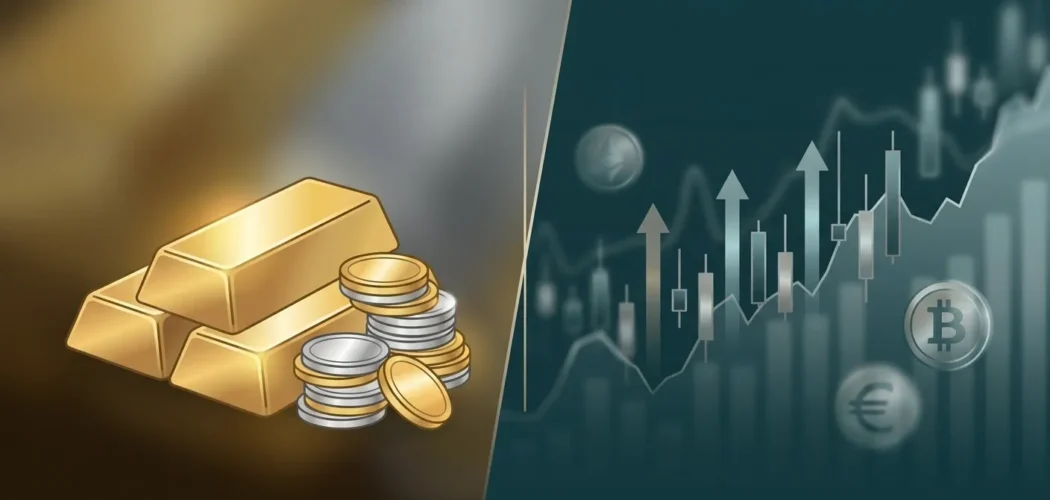
For new investors like Sarah, the idea of venturing beyond a 401k into tangible assets like gold and silver can be both exciting and a little intimidating. Market volatility, as seen with gold and silver’s dramatic swings in early 2026, might raise questions. However, these very fluctuations underscore a fundamental principle of sound financial planning: the critical importance of diversifying with precious metals for long-term wealth preservation and growth.
Precious metals have historically been a cornerstone of robust portfolios, particularly during times of economic uncertainty. While 2025 and 2026 brought record highs and increased volatility for both gold and silver – with silver’s volatility jumping 106% and gold’s 46% year-to-date in early 2026 – this inherent characteristic is precisely why they serve as powerful diversifiers. They often move independently, or even inversely, to traditional assets like stocks and bonds, offering a buffer against market downturns.
The Core Benefits of Precious Metals in Your Portfolio
Integrating precious metals into your investment strategy offers several compelling advantages. Understanding these benefits is key to appreciating their role in a well-rounded financial plan.
- Wealth Preservation: Gold, in particular, has long been recognized as a hedge against currency weakness and inflation. When the purchasing power of fiat money declines, gold tends to retain its value, acting as a stable store of wealth. This is crucial for safeguarding your savings over decades.
- Inflation Protection: With ongoing concerns about inflation, precious metals offer a tangible shield. As the cost of living rises, the value of gold and silver typically follows suit, protecting your capital from erosion. This was evident in the factors driving recent price surges, including inflation fears.
- Geopolitical Hedge: In an increasingly unpredictable global landscape, geopolitical uncertainty drives demand for safe-haven assets. Gold and silver provide a tangible sense of security when political tensions escalate. For instance, the Middle East conflict and the Russia/Ukraine war have historically influenced precious metal prices.
- Portfolio Diversification: This is where precious metals truly shine. By adding gold and silver to a portfolio that includes stocks, bonds, and other assets, you can reduce overall risk. Their low correlation with other asset classes means that when one part of your portfolio might be struggling, your precious metals holdings could be performing well, balancing your overall returns. Therefore, proper diversification is essential.
Gold and Silver: A Complementary Duo When Diversifying with Precious Metals
While both are precious metals, gold and silver offer distinct benefits that complement each other when diversifying with precious metals. Investors often find value in holding both.
- Gold: Primarily an investment metal, gold is valued for its monetary history, liquidity, and ability to preserve wealth. Its larger market size typically leads to lower volatility compared to silver, making it a steadier anchor.
- Silver: Often called ‘poor man’s gold’, silver offers both investment potential and significant industrial demand. Its role in green technologies, electronics, and medical applications means its value is tied not only to investor sentiment but also to industrial growth. This dual demand profile can lead to greater price volatility but also offers significant upside potential.
Understanding Market Volatility and Its Implications
The precious metals market, like any other, experiences periods of volatility. For example, early 2026 saw significant price swings for both gold and silver. However, it is important to view this volatility through the lens of long-term strategy. These fluctuations are not necessarily a sign of weakness; instead, they highlight the dynamic nature of these assets. Savvy investors understand that market dips can present opportunities for strategic accumulation, especially when considering the long-term trajectory of wealth preservation.
Moreover, the factors influencing these price movements are varied. Geopolitical events, shifts in central bank policies, and changes in inflation expectations all play a role. For instance, discussions around interest rates significantly impact gold prices, as higher rates can increase the opportunity cost of holding non-yielding assets. You can learn more about this relationship by exploring our article on Interest Rates and Gold: How Rates Affect Prices. Understanding these drivers helps investors make informed decisions, transforming perceived risks into calculated opportunities.
The Historical Context: Why Precious Metals Endure
The enduring appeal of gold and silver is rooted deeply in human history. For millennia, these metals have served as currency, symbols of wealth, and stores of value across diverse civilizations. This historical precedent is not merely anecdotal; it demonstrates an intrinsic human trust in their tangible worth. Unlike paper currencies or digital assets, precious metals possess a physical presence and limited supply, which contributes to their perceived stability.
Consider, for instance, periods of hyperinflation or economic collapse where fiat currencies have become worthless. In such scenarios, gold and silver often retain their purchasing power, providing a lifeline for individuals and nations alike. This inherent stability makes them indispensable components of a diversified portfolio, especially for those focused on protecting wealth across generations. Therefore, their role extends beyond mere investment; it is about securing enduring financial sovereignty.
Navigating Economic Headwinds with Precious Metals
In an era characterized by economic uncertainties, from sovereign debt concerns to inflationary pressures, the strategic importance of diversifying with precious metals becomes even more pronounced. Governments worldwide grapple with expanding national debts, leading to questions about the long-term stability of traditional financial systems. In this context, gold and silver act as a counterbalance, offering a tangible asset unaffected by the printing presses of central banks.
Furthermore, global trade tensions and supply chain disruptions can exacerbate economic instability. Precious metals often perform well during these periods, as investors seek safe havens away from potentially volatile equities or bonds. This protective quality is a primary reason why many financial advisors advocate for a dedicated allocation to gold and silver. They serve as a form of insurance against unforeseen economic shocks, helping to stabilize overall portfolio performance when other assets falter. Consequently, incorporating them can offer peace of mind.
Strategic Allocation: How Much to Invest?
Determining the ideal allocation for precious metals within your portfolio is a common question for investors. While there’s no one-size-fits-all answer, most financial experts suggest an allocation ranging from 5% to 15% of your total portfolio. This percentage allows you to reap the benefits of diversification without overexposing your assets to the unique volatilities of the precious metals market.
Your personal financial goals, risk tolerance, and investment horizon should guide your decision. A younger investor with a higher risk tolerance might consider a slightly smaller allocation, focusing more on growth-oriented assets. Conversely, an investor nearing retirement or one with a more conservative approach might opt for a higher percentage to enhance wealth preservation. Regularly reviewing and rebalancing your portfolio ensures that your precious metals allocation continues to align with your evolving financial strategy.
The Appeal of Physical vs. Digital Holdings
When considering diversifying with precious metals, investors often ponder the choice between physical holdings (coins, bars) and digital or paper-based alternatives (ETFs, mining stocks). Each option presents distinct advantages and considerations.
Physical gold and silver offer direct ownership and protection against counterparty risk. Holding physical assets means you possess a tangible store of wealth, independent of financial institutions or digital systems. This can be particularly appealing during times of extreme economic uncertainty or systemic breakdown. However, physical ownership entails considerations such as secure storage and insurance, which can incur additional costs. Moreover, liquidating large physical holdings can sometimes be less immediate than selling digital assets.
On the other hand, investing in precious metals through ETFs (Exchange Traded Funds) or mining stocks offers liquidity and convenience. ETFs track the price of gold or silver without requiring physical possession, making them easy to buy and sell through a brokerage account. Mining stocks provide exposure to the industry, potentially offering higher returns if the companies perform well, but they also carry business-specific risks. For news and insights into the mining sector, you might find our Mining News, Mining Stocks, Junior Mining section valuable. The choice ultimately depends on your preference for direct ownership versus ease of transaction and management.
Global Economic Trends and Precious Metals
The global economic landscape continually influences the demand and pricing of precious metals. Major economic indicators, central bank policies, and international relations all play significant roles. For example, a weakening U.S. dollar often makes dollar-denominated gold more attractive to international buyers, thereby increasing demand and price. Conversely, a strengthening dollar can have the opposite effect.
Furthermore, the monetary policies of central banks, particularly regarding interest rates and quantitative easing, directly impact precious metal valuations. When central banks implement policies that increase the money supply, it can lead to inflationary pressures, making gold and silver more appealing as inflation hedges. Investors closely monitor announcements from institutions like the Federal Reserve, as their decisions can trigger significant market movements. You can stay informed on such developments through our News section, which covers a broad range of market-influencing events. Therefore, staying abreast of global economic trends is crucial for making informed investment decisions in precious metals.
The Future Outlook for Precious Metals
Looking ahead, several factors suggest a continued strong role for precious metals in investment portfolios. Persistent inflationary pressures, ongoing geopolitical tensions, and the increasing adoption of silver in industrial applications (especially in renewable energy technologies) are all supportive of their long-term value. As the world transitions towards a greener economy, the demand for industrial metals like silver is expected to surge, adding another layer of investment appeal.
Moreover, the growing awareness among investors about the importance of diversification and tangible asset ownership reinforces the position of gold and silver. Many investors are actively seeking alternatives to traditional financial instruments, which can be vulnerable to systemic risks. This shift in investor sentiment, coupled with the intrinsic qualities of precious metals, indicates a resilient future for these assets. Consequently, for those seeking to build lasting wealth, diversifying with precious metals remains a sound strategy.
Empowering Your Investment Journey
Ultimately, the decision to invest in precious metals is a step towards empowering your financial future. It’s about taking control and building a portfolio that can withstand the inevitable fluctuations of the market. By understanding the unique benefits of gold and silver – their roles in wealth preservation, inflation protection, and portfolio diversification – you equip yourself with the knowledge to make confident choices.
Remember, successful investing is a journey, not a destination. It involves continuous learning, strategic planning, and adapting to changing market conditions. As your trusted mentor, Silver Price Gold is committed to providing you with the insights and guidance you need to confidently navigate the world of precious metals. Begin your journey today and embrace the resilience that comes from diversifying with precious metals.
Frequently Asked Questions About Precious Metals Investment
Why is investing in precious metals considered a safe haven?
Precious metals, particularly gold, are often seen as a safe haven because they tend to retain or even increase their value during times of economic uncertainty, geopolitical turmoil, or inflationary periods. Unlike fiat currencies, their value is not subject to government policies or the printing of money, making them a reliable store of wealth when traditional assets falter. This inherent stability makes them attractive during crises.
How do gold and silver differ as investments?
Gold is primarily an investment metal, valued for its historical role as money and its ability to preserve wealth. It typically exhibits lower volatility. Silver, on the other hand, has both investment and significant industrial demand, especially in new technologies. This dual demand can lead to greater price fluctuations but also offers higher growth potential. Therefore, they offer distinct, complementary roles in a portfolio.
What percentage of my portfolio should be allocated to precious metals?
While there’s no universal rule, many financial experts recommend allocating between 5% and 15% of your total investment portfolio to precious metals. This range allows you to benefit from their diversification properties without overexposing your assets. Your specific allocation should align with your individual risk tolerance, investment goals, and time horizon.
Can alternative assets protect against inflation?
Yes, alternative assets like gold and silver are widely recognized for their ability to protect against inflation. As the purchasing power of fiat currencies diminishes due to rising costs, the value of these tangible assets tends to increase, helping to preserve your capital. This makes them a crucial component for safeguarding long-term wealth against inflationary pressures.
What are the main risks associated with holding physical gold and silver?
Holding physical gold and silver primarily involves risks related to storage and security. You need a secure place to store your assets, such as a home safe or a professional vault, which may incur costs. Additionally, insuring your physical holdings is often recommended to protect against theft or loss. While these are tangible assets, their liquidity can sometimes be less immediate than selling digital forms of investment.

