

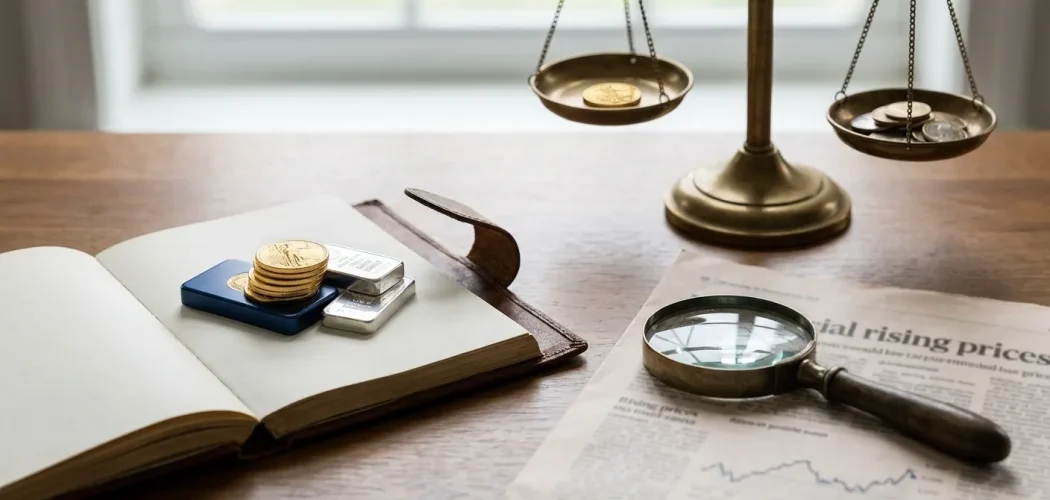
For many, the idea of investing beyond traditional avenues like a 401k can feel daunting, especially when concerns about inflation eroding savings loom large. You’re not alone in seeking tangible assets that offer real protection. This is where understanding gold silver inflation hedge strategies becomes essential. Precious metals have a long-standing history as a reliable safeguard against economic uncertainty, offering a stable anchor when currencies falter and prices rise. At Silver Price Gold, we believe in empowering you with the knowledge to make confident investment choices, and demystifying how these valuable metals can shield your financial future.
The Enduring Power of Gold and Silver Against Inflation
Inflation, the silent thief of purchasing power, can significantly diminish the value of your savings over time. Historically, gold and silver have served as robust hedges against this erosion. When the cost of living accelerates, as it did notably in 2025, gold’s performance often shines. In that year, gold’s role as an inflation hedge was particularly evident, demonstrating its capacity to maintain or even increase in value when other assets struggled under persistent inflationary pressures.
But why do these metals act as such effective inflation protection? Unlike fiat currencies, which can be printed in unlimited quantities, gold and silver are finite resources. Their intrinsic value is not subject to government policies or the whims of central banks in the same way. This scarcity, combined with their universal acceptance as stores of value, makes them attractive during periods of economic instability. Therefore, understanding this fundamental difference is crucial for investors.
Central Bank Confidence: A Powerful Indicator
One of the most compelling validations of gold’s role in wealth preservation comes from the actions of central banks themselves. In 2025, central banks globally purchased approximately 863 tonnes of gold, with significant accumulations by nations like Poland, Kazakhstan, Brazil, and China. This trend didn’t slow; it continued into 2026, with central banks averaging 1,000 tonnes of gold purchases annually for four consecutive years. A World Gold Council survey in 2025 revealed that 95% of central banks anticipated an increase in global gold reserves in 2026, and a 2026 survey showed a record 45% planning to increase their own gold reserves. This strategic accumulation is a clear signal: central banks view gold as a critical asset for diversifying their foreign exchange reserves and reducing reliance on the U.S. dollar, especially in an era of ongoing global economic uncertainty and federal debt exceeding 120% of GDP in the U.S. Their actions underscore gold’s status as a fundamental safe-haven asset.
Navigating Interest Rates and Inflation’s Dance
The relationship between inflation, interest rates, and precious metals can seem complex. While precious metals are traditionally seen as inflation protectors, rising interest rates can sometimes present a headwind. This is because higher interest rates increase the opportunity cost of holding non-yielding assets like gold and silver. However, this dynamic is not always straightforward. For instance, when real interest rates (nominal rates minus inflation) are low or negative, gold often performs well. Investors should therefore consider the broader economic context.
Historically, aggressive interest rate hikes by central banks to combat inflation can temporarily dampen enthusiasm for precious metals. Yet, if these rate hikes fail to curb inflation effectively, or if they lead to an economic slowdown, the appeal of gold and silver as safe havens typically reasserts itself. For a deeper understanding of this intricate relationship, explore our article on Interest Rates and Gold: How Rates Affect Prices.
The Role of Silver as an Inflation Countermeasure
While gold often takes center stage in discussions about wealth preservation, silver also plays a vital role as an inflation countermeasure. Silver shares many of gold’s characteristics as a store of value, including its finite supply and historical use as currency. Moreover, silver benefits from significant industrial demand, making it a unique asset. Its use in solar panels, electronics, and medical applications means that as global economic activity expands, demand for silver can also increase, providing an additional layer of support for its price. Consequently, this industrial demand can amplify its performance during certain economic cycles.
Interestingly, silver’s price volatility can be higher than gold’s. This means that while it carries greater potential for gains, it also comes with increased risk. For investors seeking a balanced portfolio, incorporating both gold and silver can offer diversified protection against inflationary pressures. Looking at recent trends, you can find more insights in our Silver News August 2026 report.
Understanding Real Interest Rates and Precious Metals
Real interest rates are a critical factor influencing the price of precious metals. They represent the true return an investor receives after accounting for inflation. When inflation rises faster than nominal interest rates, real interest rates become negative. In such an environment, the purchasing power of cash and fixed-income investments erodes. This scenario makes non-yielding assets like gold and silver more attractive, as they are perceived to better preserve wealth. Therefore, monitoring real interest rates is essential for investors.
Conversely, when real interest rates are high and rising, the opportunity cost of holding gold and silver increases. Investors might prefer to put their money into bonds or savings accounts that offer a positive real return. However, even in periods of rising rates, persistent inflation concerns can sustain interest in precious metals. This nuanced relationship means that a simple correlation is often insufficient for making informed investment decisions. Consider how global economic shifts impact these rates, as discussed in our general News section.
Geopolitical Stability and the Gold Silver Inflation Hedge
Beyond economic indicators, geopolitical stability significantly influences the demand for precious metals. During times of international tension, conflict, or political uncertainty, investors often flock to safe-haven assets. Gold, in particular, has a long-standing reputation as a reliable store of value when other investments become volatile. For example, periods of heightened global risk tend to see increased gold prices, regardless of prevailing inflation rates or interest rate policies. This makes the gold silver inflation hedge even more compelling.
The actions of nations and international relations can create sudden shifts in investor sentiment. An unexpected geopolitical event can quickly drive demand for physical gold and silver, as individuals and institutions seek to protect their capital from potential turmoil. This flight to safety underscores the importance of precious metals in a diversified portfolio, especially in our interconnected and often unpredictable world. You can observe such market reactions in articles like Warsh’s Hawkish Jackson Hole Speech Sends Gold Sharply Lower.
Building a Resilient Portfolio with Precious Metals
For individuals concerned about protecting their wealth, integrating gold and silver into an investment portfolio offers a strategic defense against inflation. It’s not about replacing all other investments but rather diversifying to mitigate risks. A well-constructed portfolio often includes a mix of assets, and precious metals provide a counter-cyclical element that can perform well when traditional assets struggle. Consequently, this diversification can lead to greater long-term stability.
The key is to approach investing in precious metals with a clear understanding of your financial goals and risk tolerance. Whether through physical bullion, exchange-traded funds (ETFs), or mining stocks, there are various ways to gain exposure to gold and silver. Each method has its own advantages and considerations. For instance, physical bullion offers direct ownership and removes counterparty risk, while ETFs provide liquidity. Investors should carefully research these options to determine the best fit for their individual circumstances. This strategic inclusion of a gold silver inflation hedge is a smart move.
The Future of Gold and Silver as an Inflation Shield
Looking ahead, many factors suggest that gold and silver will continue to serve as crucial inflation shields. Persistent global debt, ongoing geopolitical uncertainties, and the potential for continued expansionary monetary policies by central banks all point to an environment where the purchasing power of fiat currencies remains under pressure. In such a landscape, the intrinsic value and scarcity of precious metals become even more pronounced. The demand for a reliable gold silver inflation hedge is unlikely to diminish.
Furthermore, the increasing adoption of digital currencies and the evolving nature of global finance might even enhance the appeal of physical assets like gold and silver. As investors navigate new financial frontiers, the tangibility and historical resilience of precious metals offer a comforting constant. Therefore, staying informed about market trends and economic forecasts is paramount for making sound investment decisions.
Central bank actions, as noted earlier, provide a strong signal. If institutions responsible for managing national economies are increasing their gold reserves, it speaks volumes about the perceived long-term value of the metal. This institutional confidence reinforces the idea that gold and silver are not just speculative assets but foundational components of a resilient financial strategy, acting as an effective gold silver inflation hedge. For more information, the World Gold Council provides extensive research on this topic. (World Gold Council)
Global Economic Outlook and Precious Metals
The global economic outlook remains a complex tapestry of growth, innovation, and persistent challenges. Inflationary pressures, while sometimes easing, often resurface due to supply chain disruptions, energy price volatility, or fiscal policies. These macroeconomic forces underscore the continuous need for assets that can protect against currency devaluation. Gold and silver, with their proven track record, offer such protection.
Consider, for example, the impact of various economic reports and policy statements. A shift in a major central bank’s stance can send ripples through global markets. In response, investors often seek the stability offered by precious metals. This dynamic reinforces their role as a vital component of a resilient portfolio. Moreover, the long-term trends in global trade and economic development also influence the supply and demand for these metals, affecting their pricing and effectiveness as an inflation safeguard. Consequently, a comprehensive view of global economics is beneficial.
The actions of large economies, such as those discussed by the Federal Reserve, also play a significant role. For instance, the Federal Reserve’s monetary policy decisions directly influence interest rates and, indirectly, inflation expectations, which in turn affect the attractiveness of a gold silver inflation hedge. Similarly, global trade agreements and international relations can create economic uncertainties that drive demand for safe-haven assets. This intricate web of global factors necessitates a broad perspective when evaluating precious metals investments. (Federal Reserve)
Conclusion: Empowering Your Financial Future with Precious Metals
Navigating volatile economic times requires foresight and a robust strategy. Understanding the role of gold and silver as an inflation hedge is not merely academic; it is a practical step towards safeguarding your financial well-being. At Silver Price Gold, we are committed to providing you with the insights and confidence to make informed decisions about precious metals. By incorporating these valuable assets into your portfolio, you are not just investing; you are actively protecting your wealth against the silent erosion of inflation.
The historical resilience, intrinsic value, and global acceptance of gold and silver make them indispensable tools for any investor aiming for long-term financial security. Embrace the power of these metals to build a more stable and prosperous future for yourself. Your journey to confident wealth protection begins with knowledge, and we are here to guide you every step of the way, reinforcing the lasting value of a gold silver inflation hedge.
FAQ
What is an inflation hedge?
An inflation hedge is an investment that is expected to retain or increase in value during periods of rising inflation, thus protecting the investor’s purchasing power from erosion.
Why are gold and silver considered good hedges against inflation?
Gold and silver are considered good hedges because they are finite resources with intrinsic value, unlike fiat currencies which can be printed indefinitely. Their scarcity and universal acceptance help them maintain value when currency purchasing power declines.
How do central banks influence the value of precious metals?
Central banks influence precious metals through their monetary policies, such as interest rate decisions and quantitative easing. Their own purchases of gold also signal confidence in its role as a reserve asset, which can boost demand and prices.
Should I invest in physical gold and silver or ETFs?
The choice between physical gold and silver and ETFs depends on your investment goals and risk tolerance. Physical bullion offers direct ownership and removes counterparty risk, while ETFs provide liquidity and ease of trading. Each has its own benefits.
What is the relationship between real interest rates and the value of gold and silver?
When real interest rates are low or negative, gold and silver tend to perform well because the opportunity cost of holding non-yielding assets decreases. Conversely, higher real interest rates can make other investments more attractive, potentially dampening demand for precious metals.

