

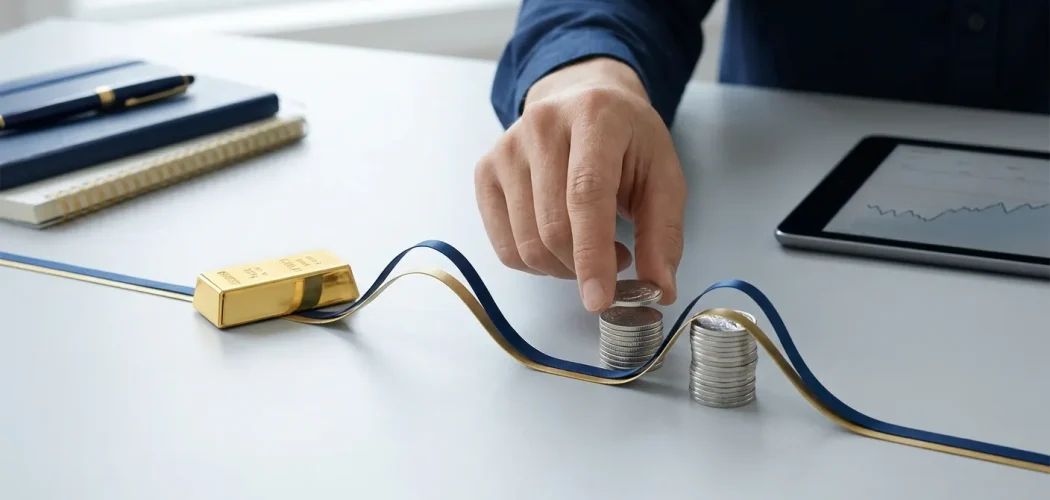
For many new to investing, the world of precious metals can seem like a thrilling, yet often bewildering, rollercoaster. One moment, prices are soaring to unprecedented heights; the next, they’re undergoing significant corrections. This gold silver price volatility is a natural characteristic of the market, and understanding it is key to building confidence in your investment journey. At Silver Price Gold, we believe that clear, expert guidance can transform market uncertainty into an opportunity for informed decision-making, especially for those like Sarah, who are looking to expand beyond traditional investments.
The Rollercoaster Ride: 2025-2026 Record Peaks
2025 and early 2026 marked a period of extraordinary performance for both gold and silver, capturing headlines and investor interest worldwide. Gold, the traditional safe haven, surged impressively, first breaking above $4,000 per ounce in 2025 and then reaching an astonishing new all-time high above $5,000/oz in January 2026, even briefly touching near $5,600 per ounce. This represented gold’s strongest annual gain since 1979, rising approximately 65% in 2025 alone.
Silver’s ascent was even more dramatic. After surpassing $60 per ounce in 2025, it continued its remarkable trajectory into early 2026, reaching an all-time high of $121.62 in January 2026. Its performance in 2025 was truly exceptional, with reports indicating gains of 145% to 190%. These record highs created immense excitement and drew significant attention to the precious metals market.
Understanding the Subsequent Corrections
However, as with any rapid ascent, a period of adjustment often follows. Both gold and silver experienced significant corrections after their January 2026 peaks. Gold saw a fall of approximately 28% from its high of $5,589.38 on January 28, 2026, settling around $4,046 by July 2026. Silver, being a smaller and less liquid market, experienced an even deeper correction, dropping over 52% from its peak of $121.62 to roughly $58 by July 2026.
These precious metals price changes might seem alarming to a new investor. It’s crucial to understand that such pullbacks are a normal part of market cycles, especially after such rapid appreciation. They reflect profit-taking, shifts in investor sentiment, and broader economic adjustments. The inherent volatility in gold and silver, which saw jumps of 46% and 106% year-to-date respectively as of March 2026, underscores the dynamic nature of these assets.
Why the Swings? Market Dynamics at Play
While a detailed dive into market fundamentals will be explored in future articles, it’s worth noting that these gold and silver market swings are influenced by a complex interplay of factors. Geopolitical events, shifts in central bank policies, inflation expectations, and industrial demand all contribute to the ebbs and flows. For silver, its significant industrial demand (657.4 million ounces in 2025, accounting for 58% of total supply) means its price movements can be particularly sensitive to economic growth forecasts and technological advancements. For instance, strong manufacturing data can boost silver’s outlook, whereas economic slowdowns might dampen it.
Gold, conversely, often acts as a safe haven during times of uncertainty. When global tensions rise or equity markets falter, investors frequently turn to gold, driving its price higher. Conversely, when economic optimism prevails and interest rates are expected to rise, gold can lose some of its appeal. The interplay between these factors creates the dynamic environment investors observe. Furthermore, the actions of central banks, particularly regarding interest rates and quantitative easing, significantly impact the perceived value of non-yielding assets like gold and silver. For more insights on this, consider our article on Interest Rates and Gold: How Rates Affect Prices.
Navigating Gold Silver Price Volatility with Confidence
Understanding that market corrections are a natural part of the investment landscape is the first step toward navigating them successfully. Rather than reacting impulsively to every dip, a confident investor develops a clear strategy. This strategy often involves adopting a long-term perspective and understanding the fundamental drivers behind precious metals. For instance, while short-term movements may be sharp, the long-term trend for gold and silver often reflects their enduring value as stores of wealth and industrial commodities.
One effective approach is dollar-cost averaging. This involves investing a fixed amount of money at regular intervals, regardless of the asset’s price. Consequently, you buy more shares when prices are low and fewer when prices are high, averaging out your purchase price over time. This method can mitigate the impact of gold silver price volatility and reduce the emotional stress associated with trying to time the market.
Moreover, diversification remains a cornerstone of prudent investing. While precious metals offer unique benefits, they are just one component of a well-rounded portfolio. Balancing your holdings across various asset classes can help cushion the impact of downturns in any single market. This strategic approach allows you to participate in potential gains while managing risks effectively, fostering true investment confidence.
The Long-Term Perspective: Enduring Value of Precious Metals
Despite the recent swings, the long-term case for gold and silver remains compelling. Gold has historically served as a hedge against inflation and currency debasement. It has maintained its purchasing power over centuries, making it an attractive asset for wealth preservation. Similarly, silver, often called ‘poor man’s gold,’ boasts both monetary and industrial demand, giving it a dual appeal. Its increasing use in green technologies, such as solar panels and electric vehicles, suggests a robust future for industrial demand.
Consider the broader economic landscape. Persistent global debt, geopolitical tensions, and ongoing inflationary pressures continue to support the underlying demand for precious metals. While there will always be periods of significant gold silver price volatility, these metals have consistently demonstrated their ability to rebound and appreciate over extended periods. Therefore, viewing corrections not as losses but as opportunities to acquire more assets at a favorable price can be a powerful mindset for investors.
For example, during periods of economic uncertainty, such as those discussed in Warsh’s Hawkish Jackson Hole Speech Sends Gold Sharply Lower, gold’s role as a safe haven becomes particularly evident. Even when immediate news might cause a dip, the fundamental reasons for holding gold often persist. This reinforces the importance of understanding the bigger picture rather than being swayed by daily market chatter. The inherent value and utility of these metals provide a strong foundation against market fluctuations.
Strategies for Managing Precious Metals Price Swings
Managing the inherent price swings of precious metals requires a disciplined approach. Beyond dollar-cost averaging, consider setting realistic expectations. No investment goes up in a straight line, and precious metals are no exception. Understanding that periods of significant appreciation will likely be followed by corrections helps prepare you mentally and emotionally. This foresight allows you to react with logic rather than emotion when market conditions shift.
Furthermore, staying informed about market news and economic indicators is vital. While we advocate for a long-term view, being aware of factors influencing gold and silver prices can help you refine your strategy. Regularly reviewing your portfolio and adjusting your allocations as your financial goals or market conditions change is also a sound practice. However, avoid constant tinkering; instead, focus on making well-considered adjustments based on thorough research and a clear understanding of your objectives.
Another valuable strategy involves utilizing stop-loss orders if you are actively trading, though for long-term investors, simply holding through fluctuations is often the preferred method. For those interested in the broader market context, articles like Gold looks to PCE inflation, Jackson Hole for direction next week can provide insights into upcoming events that might influence market direction. Ultimately, the goal is to build a robust investment plan that accounts for the inherent gold silver price volatility and allows you to remain steadfast through various market conditions.
The Role of Market Sentiment and Psychology
Market sentiment plays a significant role in magnifying or dampening price movements. During periods of euphoria, prices can overshoot their fundamental value, driven by speculative buying. Conversely, during corrections, fear can lead to panic selling, pushing prices below their intrinsic worth. This psychological aspect of investing is particularly pronounced in markets with high volatility, such as precious metals.
As an investor, developing emotional resilience is crucial. Avoid making decisions based on fear or greed. Instead, rely on your pre-defined investment strategy and the fundamental analysis you’ve conducted. Remember that market noise can be distracting; therefore, focus on reliable sources of information and expert analysis. At Silver Price Gold, we aim to provide that trusted guidance, helping you cut through the clutter and make clear, confident decisions regarding your precious metals investments. Understanding that price swings are often amplified by human emotion can help you maintain a rational perspective.
While the market can be influenced by sentiment, understanding the underlying drivers, such as central bank policies or industrial demand, offers a more stable foundation for decision-making. For instance, even with fluctuations, the long-term outlook for silver’s industrial demand remains strong, supported by its critical role in renewable energy and electronics. This fundamental strength can provide reassurance during periods of heightened gold silver price volatility.
Expert Insights on Future Trends
Looking ahead, many experts anticipate continued interest in precious metals, albeit with expected periods of fluctuation. The macroeconomic environment, characterized by ongoing debates about inflation, interest rates, and global economic growth, suggests that gold and silver will remain relevant assets. While the dramatic gains of 2025-2026 may not be replicated annually, the underlying factors supporting precious metals’ value persist.
Analysts often point to the potential for gold to retest its previous highs, especially if inflation remains elevated or if there’s a significant downturn in equity markets. Silver’s dual role means its trajectory will depend heavily on both industrial recovery and its safe-haven appeal. Therefore, monitoring global economic indicators and technological advancements that impact industrial demand for silver is particularly important. For broader market trends and news, regularly checking our News section can provide valuable perspectives.
The key for investors is to focus on the long-term narrative rather than short-term noise. Precious metals have a proven track record as enduring assets, and while their journey can involve significant gold silver price volatility, their fundamental value proposition remains strong. We encourage investors to view market corrections as opportunities to strengthen their positions, always aligning with their personal financial goals and risk tolerance.
Conclusion: Embracing Volatility as Opportunity
The journey of investing in precious metals, particularly gold and silver, is rarely a straight line. The recent significant price swings, from record peaks in early 2026 to subsequent corrections, vividly illustrate the inherent gold silver price volatility. However, for the informed investor, these fluctuations are not causes for alarm but rather natural market phenomena that, when understood, can be navigated with confidence.
At Silver Price Gold, our mission is to empower you with the knowledge and perspective needed to thrive in this dynamic environment. By adopting a long-term mindset, practicing dollar-cost averaging, and maintaining a diversified portfolio, you can transform market uncertainty into strategic advantage. Precious metals continue to offer a compelling case for wealth preservation and growth, especially in an unpredictable global economy. Embrace the swings, learn from them, and let expert guidance be your compass.
For further reading and external perspectives on market dynamics, you may find insights from sources like The World Gold Council or The Silver Institute valuable. These organizations provide comprehensive data and analysis that complement our expert guidance, helping you build a holistic understanding of the precious metals market.
FAQ: Common Questions About Precious Metals Price Movements
What causes prices to fluctuate so much?
Precious metals prices are influenced by a combination of factors including geopolitical events, central bank policies, inflation expectations, and global economic data. Industrial demand also plays a significant role, particularly for silver.
Are these price changes normal for gold and silver?
Yes, significant price swings are a normal characteristic of the precious metals market. Both gold and silver can experience rapid appreciation followed by corrections, especially after reaching new highs. This inherent market movement is part of their dynamic nature.
How can new investors manage market uncertainty?
New investors can manage market uncertainty by adopting a long-term perspective, practicing dollar-cost averaging, and diversifying their investment portfolio. Staying informed with expert guidance also helps in making confident decisions.
Is silver more volatile than gold?
Generally, silver tends to be more volatile than gold. This is primarily due to its smaller market size and significant industrial demand, which makes its price more sensitive to economic cycles and technological advancements.
Should I sell my precious metals during a price correction?
Reacting to price corrections by selling impulsively is often not the most effective strategy for long-term investors. Instead, view corrections as potential opportunities to acquire more assets at a lower price, aligning with your overall investment goals and a long-term outlook.

