

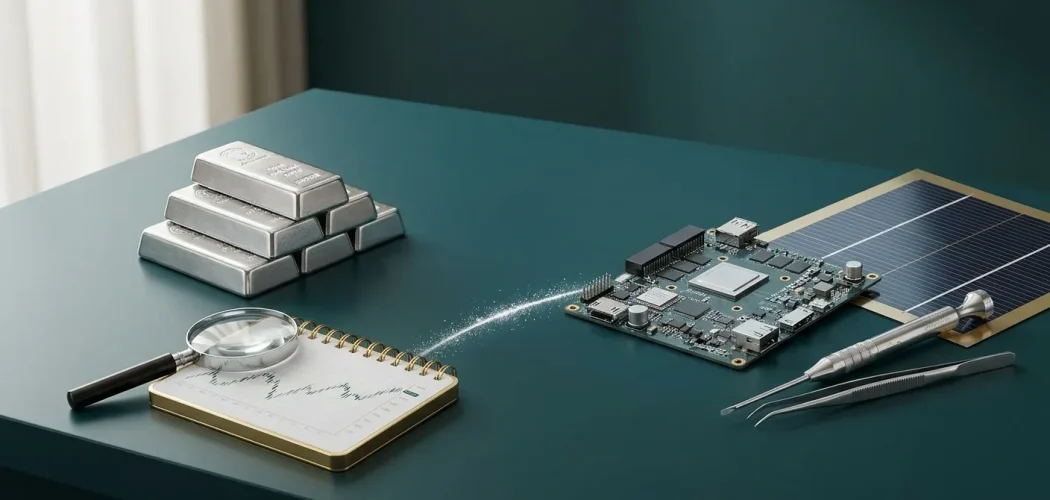
When new investors like Sarah consider precious metals, gold often comes to mind first. However, silver, sometimes referred to as ‘poor man’s gold,’ possesses a unique set of market drivers that make it an equally compelling investment, though sometimes more volatile. Understanding silver industrial demand is key to grasping its full potential and its distinct behavior compared to gold. At Silver Price Gold, we break down these fundamental differences to empower your investment choices.
Unlike gold, which primarily serves as an investment and store of value, silver has a significant dual role: it is both a monetary metal and a crucial industrial commodity. This dual nature means that its price is influenced not only by traditional investment factors like safe-haven demand and inflation but also by global economic growth and technological advancements. Consequently, this makes silver a fascinating, dynamic asset for diversification.
The Engine of Industrial Demand: Key Sectors
The industrial sector is a dominant pillar of silver demand, consuming vast quantities annually. For instance, in 2025, industrial demand for silver reached an impressive 657.4 million ounces, accounting for approximately 58% of total global silver demand. This is not a niche market; rather, it is the engine driving a substantial portion of silver’s value. Recognizing this immense silver industrial demand is crucial for understanding its market fundamentals.
So, where does all this silver go? Key industrial applications include:
- Electronics: Silver’s unmatched electrical conductivity makes it indispensable in everything from circuit boards to switches and conductive pastes.
- Photovoltaics (Solar Energy): As the world shifts towards renewable energy, silver is a critical component in solar panels, enabling them to efficiently convert sunlight into electricity. Therefore, the growth of solar power directly fuels silver consumption.
- Automotive Applications: Especially in the burgeoning electric vehicle (EV) market, silver is used in numerous electrical contacts, battery management systems, and infotainment systems.
- Grid Investment: Modernizing and expanding electrical grids, particularly for renewable energy integration, requires significant amounts of silver.
- AI-Related Infrastructure: The rapid expansion of artificial intelligence (AI) technologies, from data centers to advanced computing, relies on sophisticated electronics that often incorporate silver.
Industrial Demand vs. Investment Demand: A Balancing Act
This strong and growing industrial demand provides a fundamental support level for silver prices. It means that even if investment demand wanes, there is a constant, practical need for the metal. However, it also introduces a layer of volatility. Economic downturns can reduce industrial output, thereby impacting silver prices more directly than gold.
Conversely, periods of robust global economic growth and technological innovation tend to boost industrial activity. This, in turn, strengthens the need for silver, potentially driving its price higher. Understanding this delicate balance between industrial and investment demand is essential for any silver investor. For more insights on market dynamics, consider reading our article on News affecting precious metals.
The Role of Technology in Driving Silver Consumption
Technological advancements are consistently creating new uses for silver, ensuring its relevance in modern industries. For example, the miniaturization of electronic components still relies on silver’s superior conductivity. Furthermore, the push for sustainable energy solutions, like solar power, places silver at the forefront of green technology. This consistent evolution of technology secures a foundational layer of demand for the metal.
The rise of 5G technology, with its need for high-speed data transmission, also contributes to the demand for silver in specialized electronic components. Moreover, the internet of things (IoT) devices, becoming increasingly prevalent in our daily lives, also incorporate silver in their intricate circuitry. These trends demonstrate how integral silver is to our technological progression.
How Global Economic Health Impacts Silver’s Industrial Side
The health of the global economy is a significant determinant of industrial demand for silver. When economies are expanding, manufacturing output generally increases, leading to higher consumption of industrial raw materials, including silver. Conversely, during economic contractions or recessions, manufacturing slows down, which can lead to a decrease in the industrial need for silver. This direct correlation makes silver more sensitive to economic cycles than gold, which often acts as a safe haven during uncertain times.
Consider, for example, the automotive sector. During periods of strong economic growth, car sales, particularly for electric vehicles, tend to rise. Since EVs use a considerable amount of silver in their electrical systems, this directly translates to increased silver industrial demand. Similarly, a booming construction sector can drive demand for solar panels, further boosting silver consumption. Therefore, keeping an eye on global economic indicators is crucial for forecasting silver’s industrial trajectory.
Silver’s Unique Position in the Green Energy Transition
The global transition to green energy is perhaps one of the most powerful long-term drivers for silver. Solar panels, a cornerstone of renewable energy infrastructure, are heavily reliant on silver. As countries worldwide commit to reducing carbon emissions and investing in solar farms, the demand for silver in photovoltaics is expected to surge. This makes silver a strategic investment for those looking to align with future energy trends.
Beyond solar, silver also plays a role in other green technologies, albeit to a lesser extent. For instance, some wind turbine components and energy storage systems can utilize silver for its conductive properties. This widespread application across various renewable energy sectors solidifies silver’s position as a critical metal for a sustainable future. Indeed, this aspect of silver industrial demand is poised for significant growth.
Comparing Silver and Gold: The Industrial Divide
While both silver and gold are precious metals, their market drivers diverge significantly due to silver’s robust industrial applications. Gold is predominantly an investment asset, sought for its store of value, safe-haven properties, and monetary history. Its price is heavily influenced by inflation expectations, geopolitical tensions, and central bank policies. You can learn more about these factors in our analysis of Interest Rates and Gold: How Rates Affect Prices.
Silver, on the other hand, balances these investment factors with substantial industrial requirements. This means that while silver benefits from similar investment drivers as gold, its price also reacts strongly to manufacturing output, technological innovation, and global GDP growth. This dual nature can lead to greater price volatility but also offers unique growth opportunities tied to industrial expansion. Consequently, understanding the nuances of silver industrial demand is vital for informed investment decisions.
The Impact of Supply and Mining on Industrial Silver
The supply side of silver is also crucial for understanding its market dynamics, especially concerning industrial applications. A significant portion of silver supply comes as a byproduct of mining other metals, such as copper, lead, and zinc. This means that silver production is often less responsive to silver price changes alone, as miners prioritize the primary metal. Fluctuations in the production of these base metals can therefore indirectly impact the available supply of silver for industrial uses.
Furthermore, new silver discoveries and mining technologies can also influence supply. However, the lead time for new mines to become operational is considerable. This inherent inelasticity in supply, combined with growing industrial demand, can create periods of supply deficits, potentially driving prices higher. For more information on the supply side, check out our Mining News, Mining Stocks, Junior Mining section.
Investment Strategies Considering Industrial Demand
For investors, understanding silver’s industrial facet opens up several strategic considerations. Those with a long-term outlook might view silver as a strong play on global economic growth and technological advancement, particularly in green energy. Investing in physical silver or silver-backed ETFs can provide exposure to these trends. Moreover, silver’s volatility, while sometimes daunting, can present opportunities for strategic buying during market dips.
Conversely, investors with a shorter-term horizon might monitor industrial production data and technological news closely to anticipate price movements. Diversifying a portfolio with both gold and silver can offer a balanced approach, allowing investors to benefit from gold’s stability and silver’s growth potential linked to its industrial utility. This nuanced approach helps navigate the complexities of the precious metals market effectively.
Future Outlook for Silver’s Industrial Role
The future outlook for silver’s industrial role appears robust, driven by several megatrends. The ongoing transition to renewable energy sources, particularly solar power, is a powerful long-term catalyst. As global populations grow and economies develop, the demand for electronic devices will continue to rise, further solidifying silver’s position in manufacturing. Furthermore, emerging technologies, many still in their nascent stages, are likely to discover new applications for silver, ensuring its continued relevance.
The increasing focus on electric vehicles and smart infrastructure also paints a promising picture for silver industrial demand. These sectors are set for significant expansion in the coming decades, creating a sustained need for silver’s unique properties. While economic cycles will undoubtedly introduce short-term fluctuations, the underlying structural demand from industry suggests a resilient and growing future for silver. Keeping abreast of these developments is crucial for investors.
Navigating Silver’s Market with Confidence
At Silver Price Gold, we empower investors to navigate the complexities of the precious metals market with confidence. Silver’s dual identity as both a valuable investment asset and a critical industrial commodity presents a unique opportunity. By understanding the forces that drive silver industrial demand, you gain a clearer perspective on its price movements and long-term potential. We encourage you to continue your education and make informed decisions, transforming market insights into tangible investment success.
Whether you are a beginner or an experienced investor, recognizing the impact of industrial applications on silver’s value is fundamental. This knowledge allows for a more strategic approach to portfolio diversification and risk management. As global economies evolve and technology advances, silver’s role will only become more pronounced. Stay informed, stay empowered, and let Silver Price Gold be your trusted mentor in the world of precious metals.
For further reading and external insights, consider exploring reports from the Silver Institute for comprehensive data on silver demand and supply trends. Additionally, staying updated on global manufacturing indices from sources like ISM (Institute for Supply Management) can provide timely indicators of industrial activity affecting silver.
FAQ
What makes silver different from gold as an investment?
Silver stands apart from gold primarily due to its significant industrial applications. While gold is largely considered a monetary metal and a store of value, silver also serves as a crucial component in electronics, solar panels, and automotive manufacturing. This dual role means its price is influenced by both investment factors and industrial growth, leading to different market behaviors.
Which industries are the biggest consumers of silver?
The largest consumers of silver are the electronics industry, particularly for conductive components, and the solar energy sector, where it’s vital for photovoltaic cells. The automotive industry, especially with the rise of electric vehicles, and emerging technologies like AI infrastructure also contribute substantially to the demand for silver.
How does global economic growth affect silver’s value?
Global economic growth has a direct impact on silver’s value through its industrial demand. When economies expand, manufacturing output increases, leading to higher consumption of silver in various applications. This boosts the overall demand for the metal, which can consequently drive its price higher.
Is silver a good investment for green energy trends?
Yes, silver is considered a strategic investment for green energy trends, especially due to its critical role in solar panels. As the world transitions to renewable energy, the demand for solar power is expected to surge, directly increasing the need for silver in photovoltaic technology.
Why is silver sometimes more volatile than gold?
Silver’s greater volatility compared to gold can be attributed to its dual nature. Its price is influenced by both investment sentiment and the cyclical nature of industrial demand. Economic downturns or slowdowns in manufacturing can impact silver prices more directly than gold, which often benefits from safe-haven flows during uncertainty.

