

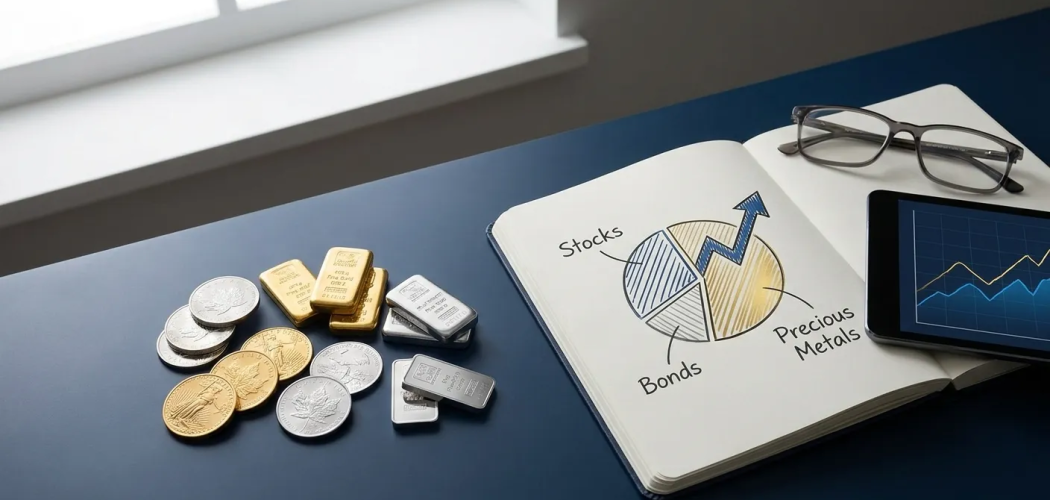
In a world where market news can feel overwhelming and financial stability seems constantly challenged, the concept of precious metals portfolio diversification offers a beacon of calm. For new investors like Sarah, navigating beyond a 401k and seeking tangible assets, understanding how gold and silver can fortify your investments is paramount. This article will explore why integrating precious metals isn’t just a trend, but a time-tested strategy for mitigating risk, preserving wealth, and building a more resilient financial future. Furthermore, we will provide actionable strategies for investors at all levels.
Why Diversify with Precious Metals?
Traditional portfolios often rely heavily on stocks and bonds. While these are vital components, they tend to be correlated, meaning they often move in the same direction during economic shifts. Precious metals, particularly gold and silver, often exhibit a low or negative correlation with these traditional assets. This means that when stocks or bonds falter, gold and silver may hold their value or even increase, acting as a natural hedge against economic downturns, inflation, and currency devaluation. Consequently, this counter-cyclical behavior is the cornerstone of effective precious metals portfolio diversification.
Consider the historical performance of gold during periods of economic uncertainty. For example, during the 2008 financial crisis, many traditional assets experienced significant declines, yet gold prices rose. This demonstrates gold’s role as a safe haven. Similarly, silver, while more volatile, also offers a distinct hedging capability. Therefore, understanding these dynamics is crucial for any investor seeking to build a robust financial plan. Moreover, diversifying with these tangible assets can provide a sense of security that purely paper assets cannot.
Key Strategies for Integrating Gold and Silver
1. The 5-15% Rule: A Starting Point for Allocation
For many financial advisors, allocating between 5% and 15% of your total investment portfolio to precious metals is a common recommendation. This range is generally considered sufficient to provide the diversification benefits without overly exposing your portfolio to the unique volatilities of the metals market. For a cautious investor, starting at the lower end and gradually increasing as comfort grows is a prudent approach. The exact percentage can depend on your risk tolerance, investment horizon, and overall financial goals. Ultimately, it’s about finding a balance that aligns with your individual circumstances.
2. Balancing Gold and Silver: A Dynamic Duo
While both are precious metals, gold and silver play slightly different roles. Gold is often seen as the ultimate safe haven, a bedrock of stability. Silver, with its significant industrial demand, can offer higher growth potential due to its greater price volatility and leverage to economic expansion. A balanced approach might involve a higher allocation to gold for stability and a smaller, strategic allocation to silver for growth opportunities. This combination maximizes the benefits of both metals within your diversified portfolio. In fact, many experienced investors view silver as
Related reading: