

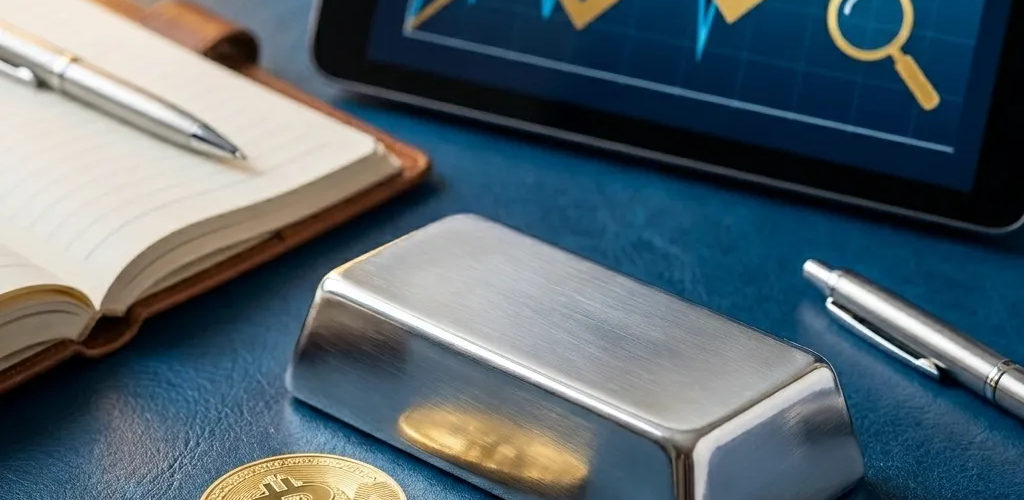
For investors like Sarah, who are looking to expand beyond traditional investments into tangible assets, silver presents an intriguing, yet sometimes perplexing, option. Unlike gold, silver often experiences more pronounced price swings, leading many to wonder about its true potential. This article aims to get silver price volatility explained, dissecting the unique factors that drive its movements and revealing why it can still be a valuable asset for long-term wealth building, especially for those seeking to diversify their precious metals holdings.
The Dual Nature of Silver: Industrial and Monetary Demand
Silver’s market dynamics are distinct because it serves a dual role: it’s both a precious metal and an industrial commodity. This dual nature is a primary driver behind understanding silver price swings.
- Industrial Demand: Silver is crucial in electronics, solar panels, medical devices, and electric vehicles due to its excellent electrical and thermal conductivity. When the global economy is strong, industrial demand for silver typically rises, pushing prices up. Conversely, economic slowdowns can reduce demand, leading to downward pressure.
- Investment Demand: Like gold, silver is also seen as a safe-haven asset and a store of value. During times of economic uncertainty or inflation, investment demand for silver often increases, providing a counter-balance to industrial fluctuations. These silver market fluctuations contribute significantly to its overall volatility.
Key Factors Influencing Silver Market Fluctuations
Several interconnected factors contribute to why silver prices change more dramatically than gold. Understanding these elements is essential for any investor.
1. Supply and Demand Dynamics
Silver’s supply primarily comes from mining, often as a byproduct of copper, lead, and zinc extraction. This means its supply is less responsive to silver price changes directly. Demand, as mentioned, is split between industrial and investment uses, creating a complex interplay that can lead to sharp movements. Consequently, even small shifts in either demand or supply can have a magnified effect on its value.
2. Gold-to-Silver Ratio
The gold-to-silver ratio (how many ounces of silver it takes to buy one ounce of gold) is a key indicator. Historically, this ratio has fluctuated significantly. When the ratio is high, it suggests silver might be undervalued relative to gold, potentially signaling an opportunity for future gains. Therefore, monitoring this ratio can provide valuable insights into potential entry points.
3. Economic Health and Industrial Activity
Because of its heavy industrial use, silver is often more sensitive to global economic health than gold. A robust manufacturing sector typically bodes well for silver, while recessions can dampen its prospects. This makes silver a more cyclical asset in some respects, contributing to its pronounced market movements. For instance, a surge in green technology initiatives often boosts silver’s industrial appeal.
4. Speculative Trading and Market Sentiment
Silver’s relatively smaller market size compared to gold means it can be more susceptible to speculative trading. Large institutional investors and even retail traders can influence its price with significant buys or sells. Furthermore, market sentiment, driven by news events or economic forecasts, can amplify these movements. This speculative component adds another layer to understanding silver’s price behavior.
Understanding Silver Price Volatility: A Deeper Look
To truly grasp the dynamics of silver’s price movements, we must consider how these factors interact. For example, during an economic boom, industrial demand for silver might increase. However, if investment demand simultaneously declines because investors are seeking higher returns in other assets, the net effect on silver’s price could be muted. Conversely, a combination of strong industrial growth and rising inflation concerns could see silver’s value surge dramatically.
Moreover, geopolitical events can also play a significant role. Conflicts or political instability can increase demand for safe-haven assets like silver, even if industrial demand is stagnant. This interplay of factors makes a comprehensive silver price volatility explained approach crucial for investors. It’s not simply one factor but a confluence of many that dictate its trajectory.
Why Volatility Can Be an Opportunity for Long-Term Investors
While the prospect of significant price swings might deter some, for the discerning long-term investor, silver’s volatility can actually present unique opportunities. These periods of fluctuation allow for strategic accumulation and potential for substantial returns.
1. Buying the Dips
Periods of downward price movements, often perceived as risks, can be excellent opportunities to acquire silver at a lower cost. A long-term investor focuses on the intrinsic value and future potential rather than short-term fluctuations. Therefore, a dip in silver prices might be seen as a chance to build a stronger position. This strategy aligns with principles of investing during financial crises without fear, turning perceived weaknesses into strengths.
2. Diversification Benefits
Including silver in a diversified portfolio can offer significant advantages. Its unique correlation (or lack thereof) with other asset classes means it can act as a hedge against inflation and economic uncertainty. When traditional investments struggle, precious metals like silver often perform well, providing balance. This emphasizes the importance of a diversified investment portfolio for beginners.
3. Long-Term Growth Potential
Despite its short-term fluctuations, silver has demonstrated considerable long-term growth potential. Its increasing use in emerging technologies, particularly in renewable energy and electric vehicles, suggests a strong future demand outlook. As global economies transition towards greener technologies, silver’s industrial utility is only expected to expand. This sustained demand underpins its long-term value proposition.
Strategies for Navigating Silver Price Swings
Successfully investing in silver requires a clear strategy that acknowledges its inherent volatility. Here are some approaches to consider:
1. Dollar-Cost Averaging
This strategy involves investing a fixed amount of money at regular intervals, regardless of the price. When prices are high, you buy fewer ounces; when prices are low, you buy more. Over time, this averages out your purchase price and reduces the impact of short-term volatility. It helps mitigate the risk of trying to time the market, which is notoriously difficult.
2. Focus on Fundamental Analysis
Rather than reacting to daily price changes, long-term investors should focus on the fundamental drivers of silver’s value. This includes global economic growth, industrial demand trends, inflation expectations, and monetary policy. Understanding these underlying factors provides a more stable basis for investment decisions. It helps in identifying market trends for perfect trade entries.
3. Maintain a Long-Term Perspective
The most crucial aspect of investing in volatile assets like silver is maintaining a long-term perspective. Short-term noise can be distracting and lead to emotional decisions. By focusing on your long-term financial goals, you can ride out the temporary dips and benefit from the eventual uptrends. This patient approach is key to benefiting from silver’s growth trajectory.
4. Monitor the Gold-to-Silver Ratio
As discussed earlier, the gold-to-silver ratio can be a powerful tool. When the ratio is historically high, it might indicate that silver is undervalued compared to gold, presenting a buying opportunity. Conversely, a historically low ratio could suggest silver is overvalued. Regularly monitoring this ratio can inform your allocation decisions between the two precious metals. For more information on historical trends, consider resources like those from the Silver Institute.
The Role of Silver in a Modern Portfolio
In today’s complex financial landscape, silver offers a compelling addition to a well-rounded investment portfolio. Its dual nature as both an industrial metal and a store of value makes it unique. For those seeking to preserve wealth during downturns and crashes, silver can be an invaluable asset. It acts as a tangible hedge against currency devaluation and systemic financial risks. Moreover, its increasing application in green technologies positions it favorably for future economic shifts.
Many investors, particularly those new to precious metals, find comfort in understanding how assets behave under different economic conditions. Therefore, getting silver price volatility explained thoroughly helps build that confidence. It empowers individuals to make informed choices rather than acting on fear or speculation. Consider how silver complements your overall financial objectives and risk tolerance.
Real-World Examples of Silver’s Performance
Historically, silver has shown impressive rallies during periods of high inflation or economic uncertainty. For example, during the inflationary periods of the 1970s and early 2010s, silver prices surged significantly. While these periods were followed by corrections, the long-term trend demonstrated its capacity for substantial gains. These movements exemplify the patterns of market cycles and volatility without fear. It is important to note that past performance is not indicative of future results, but it provides valuable context.
Conversely, during periods of strong equity markets and low inflation, silver might underperform, as investors flock to growth stocks. This cyclical behavior is a hallmark of silver. However, this is precisely when patient investors can accumulate silver, anticipating its eventual rebound as market conditions shift. Understanding these historical patterns reinforces the importance of a long-term view when considering silver as an investment.
The Future Outlook for Silver
Looking ahead, several factors suggest continued strong demand for silver. The global push towards renewable energy, particularly solar power, is a significant tailwind. Solar panels are highly reliant on silver’s conductive properties. Furthermore, the expansion of 5G technology, electric vehicles, and advanced medical applications will likely drive industrial consumption higher. This robust industrial demand, combined with its traditional role as a safe-haven asset, paints a promising picture for silver’s long-term prospects.
However, investors must remain aware of potential headwinds, such as global economic slowdowns or shifts in technological demand. Continuous monitoring of these trends is vital. Gaining a comprehensive understanding of silver price volatility explained within this future context allows for more strategic decision-making. Investors should always consider their personal financial situation and consult with financial advisors before making investment decisions. For additional market data and forecasts, reputable sources like LBMA can be invaluable.
Conclusion
Silver’s journey on the investment landscape is characterized by its distinct volatility, driven by its dual nature as both an industrial commodity and a precious metal. While these price swings can be intimidating, they also create significant opportunities for long-term investors committed to a disciplined strategy. By understanding the factors that influence silver market fluctuations, employing strategies like dollar-cost averaging, and maintaining a long-term perspective, investors can confidently navigate this dynamic market.
Ultimately, silver represents more than just a volatile asset; it is a strategic component for portfolio diversification, a hedge against economic uncertainty, and an asset with substantial growth potential fueled by technological advancements. For those ready to look beyond short-term noise, silver offers a tangible path towards building and preserving wealth. Embrace the knowledge that allows you to confidently approach silver’s unique market characteristics.
FAQ
What causes the price of silver to fluctuate significantly?
The price of silver fluctuates due to a combination of factors, including its dual demand (industrial and investment), supply dynamics from mining, the gold-to-silver ratio, global economic health, and speculative trading. These elements interact to create its characteristic price swings.
Is silver a good long-term investment despite its price swings?
Yes, for many investors, silver can be a good long-term investment. Its role as a hedge against inflation and economic uncertainty, coupled with increasing industrial demand from emerging technologies like solar and electric vehicles, provides strong underlying support for its long-term growth potential.
How does industrial demand affect silver’s value?
Industrial demand significantly impacts silver’s value because a large portion of its supply is consumed by industries such as electronics, solar energy, and medical devices. When global economic activity is strong, industrial demand for silver typically rises, pushing prices up. Conversely, economic slowdowns can reduce this demand.
What is the gold-to-silver ratio and why is it important?
The gold-to-silver ratio indicates how many ounces of silver are needed to purchase one ounce of gold. It is important because it can signal when silver might be undervalued or overvalued relative to gold, helping investors identify potential buying or selling opportunities.
What strategies can help manage the risks of silver’s market movements?
Effective strategies for managing silver’s market movements include dollar-cost averaging, focusing on fundamental analysis rather than short-term price changes, maintaining a long-term investment perspective, and regularly monitoring the gold-to-silver ratio to inform allocation decisions.
How does silver compare to gold in terms of market behavior?
Silver generally exhibits higher volatility than gold. This is largely because silver has a much larger industrial component to its demand, making it more sensitive to economic cycles. Gold, primarily a monetary asset, tends to be a more stable safe haven.