

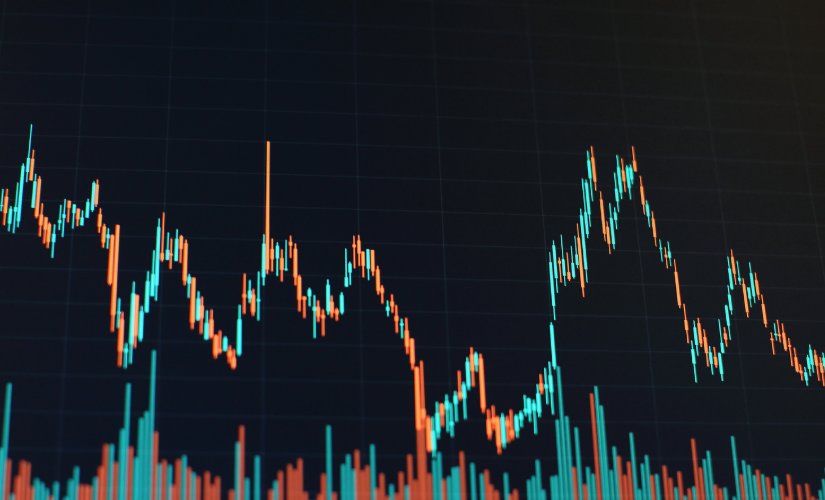
Technical indicators for trading can help traders make better entry and exit decisions by turning price, momentum, trend, and volume data into clearer signals. Many traders struggle because they enter too late, exit too early, or hold a trade after the setup has weakened. However, indicators can add structure when they are used correctly. They do not predict the future perfectly, but they can help you understand what the market is doing right now.
A strong indicator setup should support a trading decision, not replace one. Price action, support and resistance, trend direction, and risk management still matter. If you rely on indicators alone, you may react to signals without understanding the market context. As a result, you may enter trades that look good on the indicator but fail on the chart.
The best approach is to use indicators as confirmation tools. They can help you see when momentum is building, when a trend is weakening, or when price may be overextended. Therefore, technical indicators for trading work best when they are part of a simple, repeatable process.
Why Indicators Help With Trade Timing
Trade timing matters because even a good market idea can fail when the entry or exit is poorly planned. For example, you may identify the correct trend but enter after price has already moved too far. In that case, your analysis may be right, but your timing may still expose you to unnecessary risk.
Indicators can help reduce that problem by showing when conditions are improving or weakening. A moving average can help confirm trend direction. The relative strength index can show momentum shifts. Volume can show whether a move has participation behind it. When these signals align with price structure, the setup becomes easier to judge.
Technical indicators for trading also help reduce emotional decisions. Without a clear process, traders may enter because a candle looks exciting or exit because a small pullback feels scary. Indicators can slow that reaction and bring the focus back to evidence.
Use Indicators as Confirmation
A common mistake is treating every indicator signal as a trade. For example, a moving average crossover may look bullish, but if price is running into major resistance, the entry may still be weak. Likewise, an oversold signal may not matter much in a strong downtrend.
Confirmation means the indicator supports what the chart already suggests. If price is near support and momentum begins improving, the signal may carry more value. If price breaks resistance with rising volume, the breakout may deserve more attention.
This is why technical indicators for trading should not crowd your chart. A few useful tools are better than many conflicting signals. The goal is clarity, not complexity.
Moving Averages for Trend Direction
Moving averages are among the most popular indicators because they smooth price movement and help show trend direction. A simple moving average gives equal weight to each price in the period. An exponential moving average reacts faster because it gives more weight to recent prices.
Traders often use moving averages to decide whether price is trending higher or lower. If price stays above a rising moving average, buyers may have control. If price stays below a falling moving average, sellers may have the advantage. This can help traders avoid fighting the dominant trend.
Moving averages can also support entries. In an uptrend, price may pull back toward a key moving average and then continue higher. In a downtrend, price may rally toward a moving average before sellers return. These pullbacks can offer cleaner timing than chasing a move after it has already stretched.
Watch Crossovers With Context
Moving average crossovers can signal possible trend changes. For example, a shorter moving average crossing above a longer one may suggest bullish momentum. A shorter average crossing below a longer one may suggest bearish pressure.
However, crossovers can be late. By the time the signal appears, price may have already moved a long distance. Because of this, crossovers should be checked against support, resistance, and market structure.
Technical indicators for trading are more useful when they confirm a setup early enough to provide good risk-to-reward. If a crossover appears after most of the move is finished, it may not offer a strong entry.
Relative Strength Index for Momentum
The relative strength index, often called RSI, measures momentum by comparing recent gains and losses. Traders commonly use it to identify overbought and oversold conditions. However, RSI should not be used too simply.
An overbought reading does not always mean price must fall. In a strong uptrend, RSI can stay elevated for a long time. An oversold reading does not always mean price must bounce. During a sharp downtrend, RSI can remain weak while price keeps falling.
A better use of RSI is to look for momentum shifts. If price makes a new low but RSI makes a higher low, bearish momentum may be weakening. This is called bullish divergence. If price makes a new high while RSI makes a lower high, buying strength may be fading.
Use RSI With Price Levels
RSI becomes more helpful when it lines up with support or resistance. For example, if price reaches support and RSI shows improving momentum, a bounce setup may become stronger. If price reaches resistance and RSI shows weakening momentum, a long trade may need caution.
Technical indicators for trading should help you ask better questions. Is momentum supporting the trade? Is price near a meaningful level? Does the signal match the trend? These questions can prevent rushed decisions.
RSI can also help with exits. If a long trade reaches resistance while RSI shows fading strength, taking profit or tightening a stop may make sense. The signal does not need to be perfect. It simply gives you another reason to manage the trade carefully.
MACD for Trend and Momentum Shifts
The moving average convergence divergence indicator, known as MACD, helps traders read momentum and trend changes. It usually includes a MACD line, a signal line, and a histogram. When the MACD line crosses above the signal line, traders may see bullish momentum. When it crosses below, bearish momentum may be increasing.
MACD can be useful because it combines trend and momentum information. It can help traders see when momentum is building behind a move. It can also warn when a trend is losing strength before price fully reverses.
Still, MACD can lag because it is based on moving averages. This means it may confirm a move after price has already started. For that reason, traders should use it with price action rather than waiting for the indicator alone.
Look for Stronger Signal Alignment
A MACD signal becomes more useful when it aligns with the broader chart. For example, a bullish MACD crossover near support may be stronger than one appearing in the middle of a choppy range. A bearish signal near resistance may also deserve attention.
The histogram can help show whether momentum is increasing or slowing. If the bars grow in the direction of the trade, momentum may be strengthening. If the bars shrink, the move may be losing energy.
Technical indicators for trading often work best when they show agreement without repeating the same information. MACD can pair well with support and resistance because it adds momentum context to price levels.
Volume Indicators for Stronger Confirmation
Volume shows how much activity supports a price move. A breakout with strong volume may suggest real participation. A breakout with weak volume may have a higher chance of failing. This makes volume one of the most practical confirmation tools.
Volume can also help traders judge reversals. If price drops into support on decreasing volume, selling pressure may be weakening. If price breaks below support with high volume, sellers may have stronger control. These clues can improve both entry and exit timing.
On-balance volume is another useful tool. It adds volume on up days and subtracts volume on down days. When on-balance volume rises with price, buying pressure may support the move. When it falls while price struggles, distribution may be taking place.
Avoid Weak Breakout Signals
Breakout traders often get trapped when price moves beyond a level but lacks volume. The move may look strong for a moment, then quickly reverse. Volume can help reduce this risk by showing whether other traders are participating.
Technical indicators for trading should help confirm whether a move has enough strength. If price breaks resistance with rising volume and strong candle closes, the setup may be more reliable. If the breakout happens on weak volume, waiting for a retest may be safer.
Volume can also guide exits. If a trend continues but volume fades near a target zone, momentum may be slowing. This can be a signal to protect gains.
Bollinger Bands for Volatility and Reversals
Bollinger Bands show volatility by placing bands around a moving average. When the bands widen, volatility is increasing. When the bands contract, price may be preparing for a larger move. This makes them useful for both breakout and reversal traders.
Price touching the upper band does not automatically mean it should fall. In a strong uptrend, price can ride the upper band for a while. Price touching the lower band does not always mean it should bounce. Context still matters.
A useful Bollinger Band signal often appears when price stretches outside the band and then closes back inside. This can show that the move became overextended. If it happens near support or resistance, the signal may become more meaningful.
Use Band Squeezes Carefully
A squeeze happens when the bands become narrow. This shows low volatility. Since quiet markets often lead to stronger movement, traders watch squeezes for breakout opportunities. However, the squeeze does not tell you the direction by itself.
Wait for price to break with confirmation. A strong candle close, volume increase, or retest can help confirm the move. Without confirmation, a squeeze breakout may turn into a false signal.
Technical indicators for trading should never force a trade before the market chooses direction. Bollinger Bands can alert you that movement may come, but price action should confirm the entry.
Average True Range for Risk and Exits
Average true range, or ATR, measures market volatility. It does not show direction. Instead, it shows how much price typically moves over a period. This can help traders place better stops and targets.
A common mistake is using a stop that is too tight for current volatility. If the market is moving widely, a tight stop may get hit by normal movement. ATR can help you choose a stop distance that gives the trade enough room.
ATR can also guide exits. In a quiet market, smaller targets may be realistic. In a volatile market, wider targets may make sense. By adjusting to current conditions, traders can avoid using the same exit plan in every market.
Match Risk to Market Movement
Risk should fit the market, not your emotions. If volatility is high, position size may need to be smaller. If volatility is low, a tighter stop may be reasonable. ATR helps traders make these adjustments more objectively.
Technical indicators for trading become more powerful when they improve risk management. ATR does not give flashy entry signals, but it can protect traders from poorly placed stops and unrealistic targets.
A strong setup can fail if risk is badly planned. Therefore, volatility should be part of every trading decision.
Stochastic Oscillator for Short-Term Turns
The stochastic oscillator compares the closing price with a recent price range. Traders often use it to identify short-term overbought or oversold conditions. It can be useful in ranging markets, where price moves between support and resistance.
In a range, a stochastic signal near support may suggest buyers are returning. A signal near resistance may warn that price is losing strength. However, in a strong trend, the indicator can stay overbought or oversold for a long time.
This means the stochastic oscillator works best when matched to the market condition. It may be helpful in sideways markets but less reliable when price trends strongly.
Avoid Fighting Strong Trends
Many traders lose money by using oscillators to fight trends too early. An overbought signal in a powerful uptrend does not always mean a reversal is near. Sometimes it simply shows strong demand.
A better approach is to use the stochastic oscillator with levels and structure. If price is in a range, the signal may help time entries. If price is trending, traders may use it to find pullbacks instead of reversal trades.
Technical indicators for trading should always respect the larger market environment. No oscillator works well in every condition.
Combining Indicators Without Overloading the Chart
Combining indicators can improve confirmation, but too many indicators can create confusion. If your chart has five tools saying different things, decision-making becomes harder. A clean setup usually works better.
A simple combination might include one trend indicator, one momentum indicator, and one volatility or volume tool. For example, you may use a moving average for trend, RSI for momentum, and volume for confirmation. This gives you different types of information without clutter.
Technical indicators for trading should each serve a clear role. If two indicators tell you almost the same thing, you may not need both. Simplicity helps you act faster and review your trades more clearly.
Create a Clear Signal Checklist
A checklist can turn indicators into a decision process. First, check trend direction. Next, confirm whether price is near a key level. Then, look for momentum or volume confirmation. Finally, review risk, stop placement, and target.
This process keeps you from entering only because one indicator flashes a signal. It also helps you avoid analysis paralysis. If the setup meets your rules, you act. If it does not, you wait.
The best traders do not need constant signals. They need clear signals that fit their plan.
Using Indicators for Better Exits
Indicators can help exits by showing when momentum slows or volatility changes. For example, RSI divergence near resistance may warn that a long trade is weakening. A MACD histogram that starts shrinking may show fading momentum. A break below a moving average may suggest trend structure is changing.
Exits should still connect to price levels. If an indicator weakens in the middle of a strong trend, it may only be a pause. If it weakens near a major target, it may deserve more attention. Context makes the signal more useful.
Technical indicators for trading can also support trailing stops. A trader may trail a stop below a moving average, behind swing lows, or based on ATR. This can help protect profits while giving the trade room to continue.
Protect Profit With Rules
Profit can create emotion. Some traders close too early because they fear losing gains. Others hold too long because they hope for more. Indicator-based exit rules can reduce that pressure.
For example, you might take partial profit at resistance, then trail the rest using a moving average. Another trader may exit when momentum divergence appears near a target. The exact rule can vary, but it should be defined before emotions rise.
A good exit rule does not need to catch the exact top or bottom. It only needs to protect profit and fit your strategy.
Common Indicator Mistakes to Avoid
One major mistake is using indicators without understanding price action. Indicators come from price, so they should not be treated as separate from the chart. If price structure disagrees with the indicator, be careful.
Another mistake is constantly changing settings. Traders may adjust indicator periods until past signals look perfect. However, this can create false confidence. A setting that looks good in hindsight may fail in live markets.
Technical indicators for trading also become less useful when traders use them to justify emotional decisions. If you want to enter badly enough, you can usually find one indicator that agrees. A written plan helps prevent that problem.
Review Signals After Each Trade
Reviewing trades helps you learn which indicators actually improve your decisions. After each trade, record which signals appeared, where price was, and whether the trade followed your plan. Over time, patterns will appear.
You may discover that certain indicators work better for your timeframe. You may also find that some tools create confusion. This review allows you to simplify your chart and strengthen your process.
Better trading comes from consistent feedback. Indicators are only useful if they help you make better decisions repeatedly.
Build a Practical Indicator Strategy
A practical strategy should be easy to follow. Start with market context. Identify the trend, key levels, and volatility. Then use indicators to confirm timing. This order keeps price action at the center of the decision.
Choose only a few indicators. A moving average, RSI or MACD, and volume or ATR may be enough for many traders. Each tool should answer a different question. What is the trend? Is momentum strong? Is the move supported? Is risk reasonable?
Technical indicators for trading work best when they create a repeatable routine. Before entering, confirm the setup. During the trade, manage risk. Before exiting, check price levels, momentum, and your plan.
Keep Testing and Refining
No indicator setup works perfectly forever. Markets change, and strategies need review. However, constant changes can hurt consistency. The goal is to refine based on evidence, not frustration.
Use a trading journal to track your signals. Review both winning and losing trades. If an indicator improves timing, keep it. If it adds confusion, remove it.
In the end, technical indicators for trading are tools for clarity. They can help you read trend, momentum, volatility, and volume with more structure. Yet they should always support a complete trading plan.
The best signals come from alignment. Price reaches a meaningful level, the trend supports the idea, momentum confirms the move, and risk makes sense. When those pieces come together, entries and exits become easier to manage.
A strong trader does not need every indicator on the chart. Instead, they need a simple system they can trust and repeat. With the right tools, clear rules, and consistent review, technical indicators for trading can help you make more accurate entry and exit decisions without relying on emotion.
FAQ
- Which indicator is best for entry signals?
Moving averages, RSI, MACD, and volume can all help with entries. The best choice depends on your strategy, timeframe, and market condition.
- Can indicators predict market direction perfectly?
No indicator can predict direction perfectly. Indicators provide clues based on past and current data, but risk management is still essential.
- How many indicators should I use on one chart?
Many traders do better with two or three useful indicators. Too many tools can create confusion and slow decision-making.
- Are indicators better than price action?
Indicators are not better than price action. They are most useful when they confirm what price structure, trend, and key levels already suggest.
- How can I improve exit signals?
Use price targets, support and resistance, momentum changes, and trailing stops. Reviewing past trades can also help improve exit timing.